Time exposure taken recently showing Sailors Point.
.

30 August 2014


27 August 2014
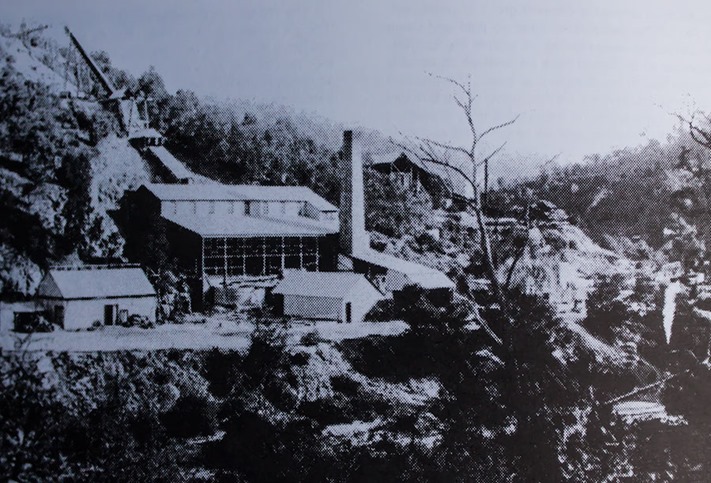
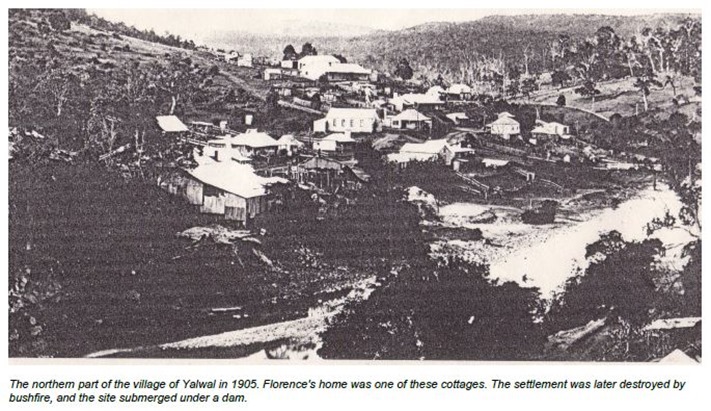
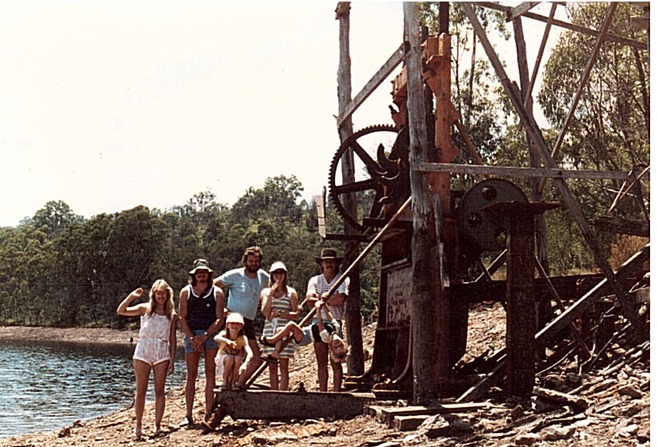
Discovery of gold at Yalwal.



25 August 2014
1872 GOLD BEARING 18 MILES WEST OF NOWRA.
August 24th 1872 Shoalhaven News announced the discovery of gold at Yalwal west of Nowra.
More to this story soon.
20 August 2014
The “John Bolton”… Launched at Huskisson 1933
| Fan fair and celebration for a little ship that would sail the uncharted seas. |
 |
Sat February 1933. Alf Settree was overseeing the launching of another one of his magnificent wooden ships into Currumbene creek. The 500 ton ‘John Bolton”.  |
| When a new vessel was being launched into the “creek” it was a time of great enthusiasm and celebration, The launching of the John Bolton drew a large crowd that gathered on the waterfront to witness the launch. From early morning the workmen had been busy preparing for the launch at high tide. By 9.30 everything was ready for the Hon. C.Marr Minister for Health and Repatriation, who would be assisted in the christening ceremony by Mrs. Marr. |
Mr Morris manager of the American Shipping Co., presided over the opening, in his opening remarks stated “that practically the whole of the timber used in the vessel was obtained locally, a fact of which the district should be proud”". |
| Designed for trade in the islands of New Guinea, and was named “Bolton” after John Bolton Carpenter, pioneer of W.R. Carpenter and Co. |
| Mr Marr. “It might be interesting to tell you, that the contract for the ship was obtained in open competition with the world.” Mrs. Marr then released the suspended bottle of Champaign and Christened the vessel “Bolton” and wished her every success. The vessel moved off gently and took to the water as graceful as a swan to the accompaniment of cheering and applause. |
| With the celebration over, she was moored to Huskisson Wharf and loaded with a cargo of 140 tons of spotted gum, the job was finished by lunch time Sunday. She was then towed by the Illawarra Co.’s ship the Kianga to Sydney, where the engines will be installed and the cabins and fittings completed, before sea trials. |
 |
 |
Sydney April 12th – Start of the Sea Trials. Just two months after her launch at Huskisson she was ready for sea trials. She was leaving port under her own power for the first time, as the John Bolton passed Fort Denison on her way to Bradley’s Head the “Barcamul”", a 237 ton trawler left her port at Woolloomooloo Bay. The vessels collided at right angles, the steel stem of the trawler striking the John Bolton close to the Starboard bow and tearing a great hole, described as “large enough for a man to crawl through”, which extended from the deck to the waterline. Water immediately rushed through the strained planking, the pumps were set going at once. Realising the ship was in danger of sinking, Captain Cruickshank turned her towards the nearest shallow, Rushcutter Bay. The Barcamul bore little trace of the collision. |
| George Dent injured in collision. At the time George H. Dent 45 shipwright of Huskisson was working in the galley, was thrown heavily and received head injuries. He was treated in Sydney Hospital where it was found he was not seriously hurt. George Dents recollection of the incident. Dent said, “he remembered very little of the incident, except that he was working in the galley when he was suddenly knocked off his balance, and hurried across the floor to a corner, where he struck his head on a post. He was temporarily rendered unconscious, when he recovered there were shouts of confusion on the deck above, and it was only then that he realised that a smash had occurred”. Mr. Alf Settree leaps to mans rescue. One man who leaped overboard and probably would have drowned, was rescued by the builder of the motorship, Mr. Alf Settree, who followed him into the water, and supported him until they were pulled back to the boat with a line. A number of other members of the crew were thrown off their feet by the impact, some suffering minor injuries, for which they were subsequently treated by ambulance officers. |
| 30th May 1933 - John Bolton arrives at Samarai. Just one month later after her eventful start she arrived in Samarai for the start of her Island trade. ”W. R. Carpenter's new island motorship John Bolton arrived early this morning after an excellent passage from Sydney. The average speed was 8 knots. After effecting registration, the vessel, under Captain Cruickshank, will sail for Rabaul”. |
| 18th Dec 1945 “John Bolton” sunk by Japanese. AWM… After many years of service throughout the Islands of the pacific and sometime during the late stages of WW2 the John Bolton met her end at the hands of the Japanese. This is the only record I have found that relates to the sinking of the John Bolton. If you have any more details please contact us - contact details above. |
 |
REF: http://trove.nla.gov.au/ndp/del/article/16970850http://trove.nla.gov.au/ndp/del/article/24882321 http://trove.nla.gov.au/ndp/del/article/112229554?searchTerm=john%http://trove.nla.gov.au/ndp/del/article/135554133?searchTerm=john%20bolton&searchLimits= 18th January 2016 We received this letter from Kim Flemming of London. He has added the details below to the story of the John Bolton.
On your interesting blog about this vessel you invite others to add to its story. I can contribute two or three facts.
1
In "The Register of Australian and New Zealand shipping, 1874-1949" a
vessel with this name is listed, although some of the details appear to
be wrong (there are numerous acknowledged errors in this book). It is
shown as being registered at Samarai, but then as having foundered at
Witu Island in 1949, which contradicts other more reliable accounts.
2
The MV John Bolton was certainly chartered by Sir Harry Maude's Phoenix
Islands Settlement Scheme, which began in 1938, to carry Gilbertese
people to the islands.
3
In January 1940 the vessel delivered supplies to the British
administrator (my great uncle) on Canton Island. It had come from Beru
(in the southern Gilbert islands), very probably having loaded from Suva
in Fiji in November of the previous year.
With best wishes.
Kim Fleming
London
|
17 August 2014
Historic building at Milton. 1887
Built 1887 by William Riley and his six sons, it was originally a general store.
Located on the corner of the Princes Highway and Croobyar Road south of Milton.

14 August 2014
Jervis Bay’s noisy visitors.

| If you live within earshot of the bay you may have heard two very loud blasts from a ships horn this morning. The Australian Navy Ship Newcastle was on the bay doing “force protection maneuvers”. This is where the ship is put under attack from small speed boats and the ship implements procedures to deal with the threat, the exercise is designed to get the ships battle ready. The loud blasts echoed across the bay and the surrounding suburbs. There are at present, HMAS Stuart, Newcastle, Dimontina and Gascoyne in the bay. |
13 August 2014
Reported in the Brisbane Courier Mail 9th June 1891- the disappearance to the steam ship Taramung, and the discovery of wreckage near Jervis Bay.
|
|

 |
 Description: print : wood engraving. Image consists of main sketch of steamship and an inset with portrait of its captain. Captain Page. Around 30 years of age, he was well known as a careful and capable ship master. Taramung was his first command and he had served on her for three years.  |
| At the time of her disappearance she was reported to have been “deeply laden with 1672 tons of coal”, but not over laden, and still 2inches above her water line. She was employed on her regular run between Newcastle and Melbourne and was due to arrive in Melbourne on the 2nd of June 1891. 30th May 11pm - She left port with fine weather, but shortly after a fierce S.E. gale set in, raising a tremendous sea. Other vessels much more powerful than the Taramung had as much as they could do to face the seas, and even the P.and O. mail steamer Carthage shipped seas forward for hours in a most alarming manner. June 1st - Reports recorded she was last seen by the S.S. Federal off the coast of Jervis Bay and appeared to be going along all right. She failed to pass Gabo Island and it’s feared she may have foundered in the gale battering the coast. |
| Wreckage found by Tomerong fisherman. A telegram from Melbourne says that a quantity of wreckage has been found in Wreck Bay. It was from Joachim Moss, a fisherman of Tomerong, and was addressed to the telegraphic authorities. The message stated that he had that day found on the beach at Wreck Bay a quantity of wreckage, including a vessel's wheel 4ft. in diameter, a ship's barometer newly broken, and a wrecked ship's boat with the oars marked " s.s. Taramung." |
| Conflicting report - Tamamung Safe. Another telegram was recieved stating that the Tamarang had arrived safely at Melbourne, but subsequently it was learned that the steamer Easby had been mistaken for the Taramung. |
 Unfortunate Passage. The number of souls on board was 23 including one unfortunate passenger Miss Moss, who had been on a visit to her sister at Newcastle. On the morning of the day the Taramung left Newcastle this young lady received news of the death of her father at Melbourne, and booked by this vessel as being the quickest means of returning. As unfortunate as Miss Moss’s story is, there is another of good fortune. Mr. Anderson, the second engineer of the Turamung, was not with her on this trip, he having remained in Melbourne to undergo one of his examinations for the qualification of chief engineer. |
 |
| Specifications. |
| REF: Link to digitised item: http://handle.slv.vic.gov.au/10381/258514 http://newspaperarchive.com/uk/middlesex/london/iron/1880/01-16/page-10 http://www.ozhistorymine.com/html/taramung_1891.html http://trove.nla.gov.au/ndp/del/article/13827433 http://trove.nla.gov.au/ndp/del/article/13827627 http://www.plimsoll.org/resources/SCCLibraries/WreckReports/16140.asp http://trove.nla.gov.au/ndp/del/article/71253999 |
Moonrise over Jervis Bay

August 12th, 8pm - The moon had an orange glow as it came up and passed behind the moving storm clouds. A magic moment over Jervis Bay.
12 August 2014
A gentleman with birds.

Bird hunting use to be a popular activity in the early 1800’s
This picture taken in Huskisson, shows a well dressed man holding a string full of birds. No explanation accompanies the photograph as to why this ‘gentleman” might be holding the birds or where they were hunted.
6 August 2014
Supermoon Sunday the 10th August

Id suggest everyone brave the cold and get outside on Sunday Night,,,The last Supermoon event was back in July and it was amazing to see. With a bit of luck the sky will be clear.

This picture taken last Supermoon event in July at midnight.
5 August 2014
Steamer for Jervis Bay – the Sophia Jane.
 1831 Sophia Jane was the first paddle steamer to operate in the coastal waters of NSW. She was built in England and arrived in Sydney in 14th May 1831. |
 |
| The arrival of the Sophia Jane was greeted with much fan fair and expectation, this new age of steam would herald in a new spirit to the coastal districts. “Persons will shortly be able, we expect, to breakfast in town, lunch at Newcastle, dine at Port Stephens, |
 |
| Shipping Notice in ‘The Australian” 1842 |
| South Huskisson |
 Image of a typical wool loaded jinker. Public Domain |
|
The Sophia Jane was most active running to Sydney twice monthly. |
 This painting depicts the Sophia Jane being loaded with hay bales on the wharf at South Huskisson (Vincentia) in 1843. The other ship is the barque Cygnet. Marine painter. Ian Hansen. |
|
|
| Sophia Jane Specifications. |
| 256 ton brig rigged paddle steamer she was 126 feet long, breadth 20ft and could travel 8 miles and hour, she was an auxiliary steamer. In practice, the disadvantages combined rather than the advantages. The type had great wind-resistance, leading to an increased use of fuel up-wind compared to a pure steam ship. At the same time, the requirement to store coal reduced the cargo space over that of a sailing ship. It thus combined the slow speed, high maintenance and poor righting (ability to resist capsize and wind) of a sailing ship with the small cargo space and fuel expense of a steam ship. |
REF: http://www.jenwilletts.com/Steamers.htm
http://www.myplace.edu.au/decades_timeline/1830/decade_landing_17_1.html?tabRank=4&subTabRank=2
Top painting. P.S. SOPHIA JANE - from a painting by Dickson Gregory, image No.; 2805501, courtesy State Library of Victoria.
http://digital.slv.vic.gov.au/view/action/nmets.doDOCCHOICE=2804725.xml&dvs=1407110792209~598&locale=en_US&search_terms=&adjacency=&divType=&usePid1=true&usePid2=true
1 August 2014
On this day – Nowra Bridge opens
1st August - 1881 - The bridge over the Shoalhaven River at Nowra was opened by Hon John Lackey MLA, Minister for Works.
The bridge was originally built high to allow for navigation and to be flood free. It has never been covered by water. Its official name is the “Nowra Bridge”. It cost a total of £42,500.
Previous post about the bridge here. Continue reading more.
29 July 2014
Museum July Newsletter on site now.
A fascinating story about the good ship Port Hole and the ongoing restoration of the Crest as well as information about the Antiques Fair and it’s special guest.
CLICK FOR NEWSLETTER HERE.
Loss of the Brigantine Schooner the George Thornton 1887

Built by Thomas Macaulay on the banks of Currumbene Creek Huskisson in 1880 for James H. Young & H.A. Gray of Sydney. She was a timber Schooner Brigantine Rigged measuring 105ft long, weighing and 185 tons.
Brigantine Rigged Schooner.
Saturday 10 am.
Leaving Bundaberg with a fresh coat of paint and looking very smart, loaded with 70.00ft of hardwood, 90.000ft of pine and 40 tons of sugar making her way to Normanton she sprang a leak.
Sunday 10am.
On Sunday morning the mate sounded the hold and found only 3 inches of water, the result of ordinary sweating. The leak was not discovered until 10am, by then there was 4ft of water in the hold. Attempts were made to clear the vessel with pumps but were unavailing.
Sunday 1pm.
She was nearly full of water,seeing that all was useless, the decision to abandon ship was made and they lowered a boat with the intention to make for shore. At this time they saw the Lucinda’s smoke and returned to the vessel.
Waterlogged and Abandoned.
Fortunately the coastal steamer Lucinda came across the doomed vessel after sighting the George Thornton flying her ensign, union down. ( a sign of dire distress) Captain South from the Lucinda immediately made his way to the stricken vessel and found her very low in the water, which was lapping over here bulwarks. No one was on her deck and her sails were barking and flailing.
A boat was seen at her stern with men on board, the Lucinda closed in and took the men on board, the men numbered 7 and they bought with them their cloths and ships instruments and papers.
Sunday 2pm.
Assisted by the load of timber the George Thornton was still afloat. Captain Loutit, at captain South’s suggestion, decided to go on board his vessel again with the intension of lowering her main sail in hopes of paying here head and steering her out of the track of ships.
While Loutit was fitted with a cork jacket, (what served as a buoyancy vest in those times). his exertions were rendered unnecessary, as the vessel heeled slowly over to windward on to her starboard side and settled down on her beam ends.
Contrary to expectations she did not go down, her pine deck cargo getting under her rigging and remaining there between the masts and so assisting to buoy her up.
Nothing more could be done.
Sunday 3pm.
The Lucinda steamed around her several times, and at a quarter to 3pm, finding nothing more could be done, the position of the wreck was taken, before the Lucinda steamed away.
….”Round Hill Head bearing west by north three-quarters north from the wreck, 91/2 miles. The wreck is 5 miles in a direct line from the beach and lying right in the track of steamers”….
Thomas Macaulay 1879.
Described as a sturdy Canadian who spent most of his time at sea as a shipwright, employed by William Perverly of Balmain.
1890 Currumbene Creek showing slipways extending into the creek.
Boat Construction, Currumbene Creek 1800’s
The Macaulay yard was set up right next to the Dent yard on the banks of Currumbene Creek at Huskisson.
In 1879 Thomas Macaulay was in charge of the yard for Mr Pabeley (Peverley) of Balmain.
A visitor to the area described the scene of Thomas Macaulay’s yard on Currambene Creek in 1879 in an article in the Shoalhaven Telegraph.
…“In it is the colossal hull of what in about three months will be a brigantine… The keel of this vessel has been laid out about two years and considering the choice of material and the tact exhibited in the fittings and general work of construction. Mr Macaulay may be congratulated on the progress he has made….
For more information you can purchase from the Museum Shop a beautifully written book by Volunteer, Bridget Sant, called “Huskisson’s Ships and their builders 1861-1977.

 |  |
28 July 2014
Woollamia Church 1934
| Strolling the grounds of the museum nestled amongst the spotted gums you will find one of the tiniest church’s in Australia , measuring 6mx3m, with a small 1.6 sq/m foyer. |
 Originally located in Goodlands Road Woollamia on a bush block, it was initially a non – denominational church built by a few local families.  Woollamia Church opening day.  |
| 1934 - Construction began during the depression when tree local men were laid off their jobs. It was constructed on land donated by local developer Henry Halloran, the community donated both labour and materials. Later being taken over by the Methodists, but other denominations retained the right to use it. 1994 - There was a push to have the church moved to Huskisson, the Woollamia community resisted the move and it stayed on it’s bush block. 1950 - Following a bush fire the building was repainted and lined, an organ recess, arched window and dias added. 1989 - Attendance had dropped to two and the decision was made to sell the property including the building after concerns about it’s long term welfare. 1996 - New owners Reiner and Eileen van Beck donated the church to the Lady Denman Museum. 1997 - With the help of the Jervis Bay Lions Club, Integral Energy and other local businesses the church was moved to the grounds of the museum. Restoration was undertaken by volunteers with Shoalhaven City Council donating paint and assistance from the Councils Heritage Advisor, Bruce Dawbin and John Flett. 1997 – The completed restoration was celebrated with an official opening by Mayoress, Val Atkins and blessed by Bay and Basin Uniting Church Minister Rev. Maggie Peereboom.  |
REF: Shoalhaven Independent Nov 26, 1997. |
26 July 2014
The Atlantic enters Jervis Bay.
On this day 25th July 1797 Lieutenant Richard Bowen the man responsible for naming Jervis Bay died during the battle of Santa Cruz de Tenerife. |
|
|
That’s another story for a future post. |
Richard Bowen a short but distinguished life. |
|
| REF: |
 Bowen gave the bay it’s English name.

 Interwar years, how it came to be?.


25 July 2014
SS Patonga at Huskisson Wharf

| Another fantastic image from the Lady Denman’s collection. SS Patonga loading timber at Huskisson Wharf. |
Subscribe to:
Posts
(
Atom
)