.

.
HOME OF THE LADY DENMAN - Local history isn't always about the big story - the everyday story of life in the early development of the region can be a fascinating, entertaining and educational journey.
Showing posts sorted by relevance for query Steamer Coomonderry. Sort by date Show all posts

26 October 2017

S.S.Coomonderry. 1886

image
October 26th 1886 The cargo/passenger steamer S.S. Coomonderry entered Crookhaven Heads on the final leg of her long journey from Scotland.   Navigating her way along the Shoalhaven River before tying up alongside the Bomaderry wharf.   She was a brand new steel screw steamer especially built for David Berry.

David Berry took over the running of the Coolangatta Estate after his brother John Berry died in 1848.  The Coomonderry was originally intended for weekly
travel between Bomaderry and Sydney. Her travels under different owners extended from Cairns to Tasmania.  She frequently called into Jervis Bay and Huskisson.  She had a very long career spanning 83 years, with many adventures along the way.

Going by the number of times she appeared in newspapers it seems she had an affinity for becoming grounded, especially at the entrance to the Crookhaven River.

When trading to the Shoalhaven and further south some of her "skippers" were Captains Baker, Bruce, Barclain, Canty "and Davis.

image

S.S. Coomonderry as she would have appeared to the Jervis Bay residents  - Gratefully supplied by the Maritime Museum of Tasmania.

Below are just some of her notable inclusions in newspapers.

May 1896 - The Coomonderry arrived at Coolangatta with the governor and a party after a three-day shooting and fishing expedition to Jervis Bay.

February 1898 -  When steamer Atacama foundered 300 miles off the coast and intensive search for survivors was carried out.  The Coomonderry reported passing the captains lifeboat, waterlogged, seven miles south of Kiama.  At this stage, no one knew the fate of the crew.  After a few days of searching some of the crew were found including the captain, sadly, 12 other men were lost to the sea.

April 1899 - She put into Jervis bay through the stress of weather,  The weather improved during the day and she resumed her voyage south at 6.40 p.m.

July 1900 - During devastating floods of the Shoalhaven, the Coomonderry broke from her Bomaderry wharf moorings due to the rush of water and drifted a short distance before going aground.
She was later refloated and taken to safe moorings on the south side of the river.

July 1904 – On a voyage from Moruya to Sydney she ran into a strong east coast gale with thick rain and rough seas, she sought shelter in Jervis Bay.  She was joined a few hours later by the ketch Jess.

imageFebruary 1905 – One of the more unusual incidents accured when the Coomonderry was tied up the the Bomaderry Wharf.  On leaving the ship a passenger, the only one on the ship, stole a spotted dress belonging to one of the ships stewardesses valued at 2 pounds. She was arrested on the Nowra showground and taken to the local lockup. She pleaded guilty and was fined 2 pounds, the fine was paid by her mother.


image

August 1907 - She went ashore in the Crookhaven River, she was floated off at high tide sustaining no significant damage.

image

April 1908 - She was involved in the rescue of passengers from the ill-fated S.S.Bega  which foundered off the south coast near Tathra. She transported some of the passengers back to Sydney.

September 1908 - She struck the breakwater at Moruya and was slightly damaged. Two of her plates on the port bilge had been badly dented and water made its way into the vessel. Several weeks earlier the master of the Coomonderry furnished a report to the Department of Navigation calling attention to the condition of the breakwater and the spit, which were a menace to vessels trading to Moruya.

June 1909 – During loading operations at Wollongong the mate, John Marchant, fell heavily against the casing of the boiler and broke 3 ribs.

May 1910 - Captain Willis, R.N.R., steamed into Jervis Bay seeking shelter from a gale and a large swell which was hitting the south coast.


As steamer pre-1915
From the collections of the State Library of New South Wales.

July 1910 – The ships cook fell overboard and and nearly suffocated before being rescued. They continued on with their voyage south but on arriving at their next destination it was found necessary for him to seek medical aid.image

November 1910 - she went aground at Crookhaven heads while attempting to cross the bar she floated off with the rising tide and proceeded to Nowra.

January 1910 - She grounded at Crookhaven Heads entrance but was floated off with the rising tide.

January 1910 - One week later she grounded again at Crookhaven Heads entrance but was floated off with the rising tide.

September 1911 - She went aground at Crookhaven heads and remained fast all night. Floated off on the rising tide the next day.

December 1911 She went aground trying to leave the Crookhaven river, she suffered no damage and was floated off at high tide.


Sept 1912

image


March 1913
- She reached Sydney from Jervis Bay with the hull of a new tug in tow.

May 1913 - While attempting to cross the bar at Narooma she went ashore inside the bar on a sand spit,  she was refloated on the high tide.

August 1913 - She crashed into the Huskisson wharf after going full speed ahead instead of astern causing significant damage and displacing a ballast log.

image

1915 - She was converted into an auxiliary 3 masted motor vessel.
After laying idle at Williamstown for several years the old steamer owned by Mr.A.H. Hansell of Sydney was purchased by the Straits Shipping Company for the Tasmanian timber trade.  She was converted into an auxiliary motor vessel.

Auxiliary vessels.

Many steamers and sailing vessels were converted into auxiliary vessels. By either adding sails or an engine, these vessels were no longer at the mercy of the wind.  Steam and sail combined reduced running costs, by using their sails when the conditions were favourable as well as having the luxury of being steam driven when the need arose.  With the rapid developement of diesel engines,  owners quickly converted to this new and more efficient power source, combining wind power with diesel power increased the vessels speed and therefore shortened their port to port time.

copyright free
Source / Donor: Gift of Mr. Allan C. Green ca. 1940.

March 1915 - she was sold to the Trawl Fisheries Ltd., who employed her in the trawling and fishing business off the Australian coast.

image

thumbnail_Coomonderry P_OM_F_18c

image


August  1923 - She had a lucky escape when she went aground off Emu Bay, Bernie, Tasmania suffering hull damage.  At first it looked like she would become a total wreck, but she was eventually towed to safety by the S.S Hilsmeads which by coincidence was built at Jervis Bay, repairs carried out. Her captain was cleared of any wrong doing.  More on the S.S.Hillsmeads

October 1925 – Crew member Phillip Franklin  accidently threw fuel on the fire in the galley thinking it was kerosene,  he suffered burns to the face and head and was taken to Melbourne hospital for treatment,  he was later allowed to return to the ship.

July 1926 – During a passage from Smithton to Melbourne the vessels engine broke down. While attempts were being made to repair it,  the vessel ran into heavy weather. She tried to return to Smithton but the wind veered and the captain decided to run for the Victorian coast. The weather was so bad the tops of two masts were broken.  The voyage which usually took about 2 days took the damaged Coomonderry 11 days.  Suffering from lack of food the crew lived largely on potato's and turnips from the hold.


image


June 1932 – The vessel cleared Port Phillip Heads and soon after ran into a severe gale, the vessel was constantly awash with large waves, during the storm 26 year old John Gustaffsen, a Finn, and an able-bodied seaman, while on watch was washed overboard.  A lifebuoy with a patent flare attached was immediately thrown overboard.  Captain O'Neill at imminent risk made a desperate but futile efforts to put the vessel about.  Gustaffsen had to be left to his-fate. The engineer praised the engine which for three days of the grueling voyage never missed a beat. The crew praised the seaworthiness of the vessel, and Captain O'Neills skill in seeing the Coomonderry through what was described as one of the worst storms to hit the straits

June 1935 - The Coomonderry collided with the cargo steamer Lutana in Port Phillip Bay.  The captain's certificate was suspended for one month after he was found guilty of failing to keep a proper lookout,  and having failed to alter his course in time to avert a collision.


image

March 1939 - 50 years old and still trading, she ran aground with her crew of seven half a mile north of St Leonards Pier early in the morning, first attempts to refloat her on the evening's high tide failed, she was refloated the next morning.

August 1946 – Caught in a 70 mph gale the Coomonderry berthed at Melbourne. She was carrying 80.000 super feet of housing timber.  During the height of the storm the cooks pots and pans were washed over the side. Men asleep in their bunks found themselves caught in waves bursting into the forecastle,. Some timber deck cargo went overboard, and the lifeboat was filled with water from the sea. After docking the men had their first sleep for 24 hours.

Coomonderry-P29MCoomonderry-P29T
January 1948 – She went aground on the "Doctors Rocks" at the mouth of the Inglis river, Wynyard, she was refloated and surveyed, agents  C. H. Smith 8i Co., re-issued a certificate of seaworthiness.

1949 she was refitted for the South Australian wheat trade.

image

1950  - she worked in the Kangaroo Island trade.

1968 – she was sold to a P.E. Goulish, Cairns. 

The S.S.Coomonderry had a continuous working life of 83 years....she was regarded as a very fine vessel travelling thousands of sea miles from Queensland to Tasmania. She was highly regarded as a well-built ocean-going vessel.  She suffered many times being caught on shifting sandbars at the entrance to ports,  not an uncommon occurrence for many of the vessels working the east coast of Australia.

Her luck finally ran out in October 1969 when she was wrecked on North Minerva reef 500 miles south of Suva. No futher details are known.

A sad end to a long and successful career under the command of many captains. She had been bought and sold many times, refitted with new engines on a number of occasions and travelled to many ports along the east coast and beyond, she weathered many storms that could have ended in disaster to a lesser ship.

Continue reading about the S.S.Hillsmeads.

Dimensions - 110 ft 2 inches in length
20 feet 1 inch in brath
7ft 6 inches deep.
147 tons


Builder - Thomas B Seath & Co, Rutherglen at Broomloan
Registered owners
1898 Berry Estate
11/1898 Moruya Steam Navigation Co, Moruya NSW
6/1904 R Anderson & Allen Taylor.
11/1905 Illawarra & South Coast Steam Navigation Co Ltd, Sydney NSW
1915 Arthur H Hassell, Melbourne - reg Melbourne
1920 Henry Massey, Melbourne
c1922 George Lee, Melbourne
1930 J S Lee & Sons, Melbourne
1940 J S Lee & Sons (Melbourne) Pty Ltd, Melbourne
1943 J S Lee & Sons (Tasmania) Pty Ltd, Melbourne
19xx P & E Goodlich, Cairns. 


image

13 September 2016

Crookhaven Heads.

Wrecks and Melancholy.

image1822 - Alexander Berry entered the Crookhaven River with the Royal George,  a vessel of 500 tons,  charthered by him in London. Berry found the entrance to the Shoalhaven River was to dangerous and impossible owing to the shoals with which the entrance was dotted.  He entered the Crookhaven River and proceeded to cut the first canal to be formed in Australia  three quarters of a mile in length joining the Crookhaven to the Shoalhaven River,  the canal has since grown to be wide and deep making the bar crossing at Crookhaven Heads  the main entrance for vessels of all descriptions into the Shoalhaven River.
Being safer than the Shoalhaven River entrance didn’t mean the Crookhaven River entrance didn’t pose it’s own problems.  As can be seen by the list below there is history of catastrophe and and lucky escapes associated with crossing the bar.

This is by no means a complete list, there are other stories to find and tell.

Even now in these so called “modern times” when lifesaving and communication equipment are readily available, vessels and people still get into difficulty crossing the bar,  sometimes with tragic endings.

1858 – The Schooner Mountsbay. Once the news of the wreck was known, Captain M’Cue of the Steamer Nora Creina,  sent out his lifeboat,  manned by a portion of his crew and two volunteers ashore,  who were accompanied by Mr. Barker,  mate of the steamer and Mr. W.C. Morrison of Greenwell Point.  Fortunatly these parties saved all the cargo but the schooner became a total wreck. - All hands were saved..

1853 – Wooden Ketch Susan. From Broulee, 27 tons, went ashore during a heavy gale – reports indicate all hands perished.

1860
- The Barque Solon
, 565 tons with Captain H. Rohde left Sydney at 10a.m. bound for Geelong with a cargo of 35 tons of coal, 35 tons of hay and a quantity of ships stores.
The vessels head was kept offshore in the S.E wind. The S.E wind started to develop into a gale and all sail was reduced until she was under close-reefed topsails and reefed courses.   A heavy easterly swell continued to set in,  and the ship continued working to the southward until morning at about 3 a.m.  when breakers were discovered,  every inch of canvas the vessel could bear was at once set,  and endeavourers made to claw her off the land, but without effect,  and shortly after she was lifted bodily onto the rocks,  her head being at the time to the southward.
The ship was driven over the outer batch of rocks into deep water,  but she was still separated some distance from the main land. The vessel broke up rapidly,  and the crew with great difficulty saved their lives,  with the exception of one lad,  named Louis Lase a native of Britain,  who was unfortunately drowned.
Daylight revealed the vessel had gone ashore at the south side of Crookhaven Heads.
The hull split into three parts,  with the sea making a clear breach over the ship,  there was little hope of saving anything beyond spars and part of the rigging and sails.

1864 - The Barque Pacific, During devastating floods and gales that inundated the farms and towns of the Nowra Shoalhaven region, two vessels were lost .  The 313 ton American Built Barque Pacific,  property of Mr.. William Wright, of Sydney, under the command of Captain Chase became a total wreck at Crookhaven heads. The beach below the Crookhaven Heads was strewed with candles.
One man was lost after jumping from the ship onto the rocks.

1864 – The Ketch Sarah, from Sydney was lost at Crookhaven Heads during the same storm as above - one man was lost after being washed from the helm.

1873 – The S.S. Coolangatta, paddle steamer, 87 tons, during floods and in ballast she parted from one sea anchor and dragged the other.  She was swept out of the river and capsized,  the crew escaped with great difficulty in their boat. She was later picked up, bottom upwards and during an attempt to tow her into the Crookhaven River and right her,  she sank in deep water.

1880 – The Schooner Henrietta.
In ballast between Sydney and the Shoalhaven went ashore in squally conditions on Wednesday night at 11.pm,  by Thursday she had parted amidships and became a total wreck.   all the crew were saved.

1893 – The Result
, 56 tons, built at Wangaroa N.Z in 1882, on a dark and overcast night the Result under full sail went ashore, near Crookhaven Heads, Master Walter Graham, and the crew were saved and were engaged in dismantling the wreck. The marine board found captain Graham guilty of careless navigation and suspended his licence of three months.

1899 – The entrance was becoming a very big problem,  large swells had cut away a mangrove flat on the northern entrance and debris and silt were making the bar imposible for the steamers to cross except on very high tides…this was causing delays to shipping and with the improvements to the railroad between the Shoalhaven and Sydney the need to spend money to fix the problem wasn’t as high on the local and federal governments adjenda as it might have been in the past.

1901 - The Ketch Chippewa 26 tons, wrecked at Crookhaven Heads during a heavy gale – reports indicate that all hands were lost,  she lay in about 60ft of water and attempts were made to salvage her,  but when the cables gave away, she went to pieces. .

1907 - The S.S. Allowrie,  grounded at Crookhaven Heads on the 30th.  But since floated off  and apparently undamaged.

image

Allowrie crossing the bar 1905.

1908 - S.S. Moruya, built in Preston England she is a twin screw steamship of 525 tons,  belonging to the Illawarra and South Coast S.N. Company Ltd.. went aground at Crookhaven Heads,  she remained fast, but she wasn't in a dangerous position and was floated off the next day.

imageS.S Moruya. REF: https://www.flickr.com/photos/powerhouse_museum/8029078562

1907 – Rocket Brigade, was stationed at Crookhaven Heads. Continue reading

1908 – The S.S. Peterborough, 159 tons, built by Atlas Engineering Co., Woolwich, New South Wales for the Shellharbour S N Co Ltd.  grounded near Crookhaven Heads,  but was not in a dangerous position and was refloated on the next high tide.

S.S. Peterborough. 

1909 - The Ketch Wave. The well know ketch Wave went aground at 3.30p.m inside Crookhaven Heads while attempting to beat into the river.  As the sea was smooth,  the vessel was in no immediate danger and was floated off at high tide.

1901 - S.S. Ben Bolt. wooden steamer, 83 tons grounded at Crookhaven Heads,  she was refloated at the next high tide..

1910 – Building a breakwater.  With fears of the entrance becoming totally unpassable because of silting the decision was finall made to build a breakwater to help alleviate the washing away of the Commerong Island Point,  at the time these photo’s were taken the bar was almost completly blocked to steaming vessels.

image
1- Hoisting stone from pontoon to breakwater.
image
2 -Mode of tipping the stone.

image3- Crookhaven pilot station opposite the breakwater.
image4 - Quarry from which the stone is obtained. It is about 200 yards from the shoalhaven bridge,  and the stone has to be hauled about twenty miles to the breakwater.
5 – Crookhaven Lighthouse.

1911 – S.S. Coomonderry
– 147 tons steel steam ship, Aground as Crookhaven Heads - at this time the entrance to the river was very badly silted, going from, and coming into the river posed many challenges without the added pressure of the river becoming to shallow to cross except on dead high tide.  After being grounded Captain Willes was so concerned he wrote a report to the South Coast Steam Navigation Company, Ltd; outling his fears.
 

"I consider the crossing is almost as shoal as it was after the January flood,  and if immediate steps are not taken the Coomonderry will only be able to cross at very high tides.   In the present condition I do not think we could manage it at the neap tide at all.  As it is,  on high tide we can only cross in at high water,  instead of three hours before,   and this will be a serious thing to be so delayed.   There is no tug at Crookhaven Heads,  and when a steamer gets into trouble she must depend upon her own steam and anchors"

 
Full-size imageS.S Coomonderry – In rough seas off Bernie Tasmania.   She was originally a steamship but was converted to a fore and aft schooner.
REF:
http://eheritage.statelibrary.tas.gov.au/resources/detailb433.html?ID=CHH_00635
imageimage
Stranded on the shore in Bernie Tasmania.

1912 – The S.S. Brooklyn, Wrecked at Crookhaven Heads, crew of 8 saved...continue To previous post about the S.S. Brooklyn.

1924 – S.S. Bodalla – Grounded on rocks Crookhaven Heads. Continue Reading below. 

1934 - The S.S. Unique, Wooden screw steamer,  84/58 tons. steaming from Sydney, she Sprang a leak and foundered off Crookhaven Heads,  Crew of seven saved

1936 - A launch,  skippered by Mr. Hope Bartlet and accompanied by his mechanic, Mr. Frank Ball, left Crookhaven River at night,  soon after leaving the entrance the weather changed,  the sea began to rise in front of a developing north east gale,,,motoring for some time without making any headway and starting to ship a sea or two,   it was decided they should return to the safety of the river.  Trying to enter the river in total darkness, the launch ran right up onto rocks smashing a hole. The men managed to find safety by scrambling across the rocks and getting ashore,.  The vessel became a total wreck.


BACK

29 March 2018

The Schooner Result – 1890's

imageimage
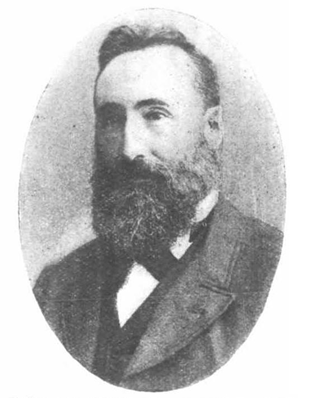
The story of the Schooner Result and it's connection with the Jervis Bay region starts with a South Coast Pioneer, Mr Alexander Mathie. JP., A native of Whitburne, Linlithgow, Scotland he arrived in Australia with his parents in 1857 being 10 years of age. The settled in the Shoalhaven District and engaged in farming and dairying pursuits with success.

He was described as a man of ' dogged perseverance" and soon became possessed of considerable lands in the vicinity of St Georges Basin. The local timber industry had stagnated when Mr Mathie recognising the value of local timber for shipbuilding and the ever growing Sydney market started a sawmill and engaged in the timber trade.  With dogged determination he built his business into a financial success..

Slipping ships was an expensive undertaking, having to take ships to Sydney, costs could amount to 3 pounds per day, so Mathie set about and built his own large modern slipway on the western side of the Basin under the lee of Tallyan Point in close proximity to Tallyan wharf where the schooner usually took in her deck cargo.

Untitled-1

By 1987 he had bought the Schooner Result from New Zealand. The Result was the first vessel to slip on his newly established slipway. Winched clear of the water for maintenance, the schooner was used to ship timber from his Basin mill to Sydney.

Alexander Mathie  died at Tomerong on June 26 from complications from a apoplectic attack.

The fore and aft Schooner Result.
The Result was a huge centre board kauri built boat, 56 tons, without a hold of any kind with only fore and aft cabins below deck for the crew.  The Result was built for shallow waters, havinga  keel that could be raised, her shallow depth and lightweight kauri construction suited the shallow Basin and the ever-changing Sussex Inlet bar.  The timber was loaded onto the deck of the vessel.  The Result would on average make fortnightly trips between ports, she was a very busy ship which required regular maintenance, which was carried out on the Mathie slips.

1891 - She was pulled from the water for some time and completely overhauled.  On her completion a gathering of local people attended the relaunch, with an el fresco supper provided by the ladies.  The blocks were pulled away and the vessel gracefully slipped into the Basin amidst the cheers of the gathering, guests were welcomed aboard and taken on a cruise across the Basin.

By 1891 the Result had shipped over 3 million feet of timber between the Basin and Sydney, mainly shipping ironbark, turpentine, black butt, woolly bark and spotted gum. She was well suited to the trade.  The run to Sydney in favourable conditions taking around 24 hours.  She kept 10 men continuously employed.

1892 The Result had been operating without serious incident for 6 years but was now sitting on the bottom of the sea near the entrance to Sussex Inlet.

image

While trying to enter the bar on a moonlit night around 9 p.m. she struck rocks and was holed, hauling clear of the rocks she quickly sank in deep water without loss of life.
Six weeks later she was refloated and taken 7 miles up the river to her moorings inside St Georges Basin waiting to be hauled up onto the slip for repairs. The accident was first blamed on Mr Mathie who was on board at the time and had suggested to the mate, who was steering, to take a shortcut, which in the dusk appeared to be smooth water but turned out to be a flat reef.
Later the reports were changed with no blame being on the channel, or on the part of any person on board, but because in "wearing" the schooner, she refused to come around fast enough, and was carried upon the rocks by the tide. It was expected the repairs would take three months.

The following year the Result made her final voyage.
1893 September 30 The vessel was on a return trip in ballast from Sydney to St Georges Basin.

12.30p.m The schooner left Sydney under a fresh N.E wind the course steered being S.S.W.

7.45 p.m She passed Kiama the same day where the weather became thick, with a nasty south – east-swell developing, accompanied by a squall from the east.
 
8 p.m The captain relieved the man at the wheel, altered course for half an hour to the south and then brought her out to S.S.W.

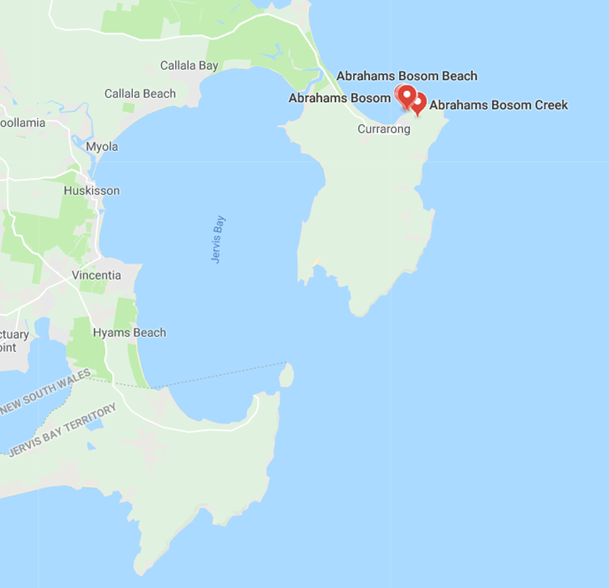
10.30 p.m. The captain sighted land and found that the schooner was in the bight at Abrahams Bosum near Jervis Bay.  He at once called all hands up, and three times they attempted to stay the vessel. She missed each time, however, and the anchor was then dropped, It did not hold, and a minute later the schooner grounded, and ultimately became a total wreck.

The crew affected a landing without incident, taking all their belongings. They remained by the wreck until Sunday and succeeded in securing a quantity of gear from the vessel. The Result was uninsured.
The crew were returned to Sydney by the Steamer Coomonderry.

image


image

Marine enquiry.
Barnard Sholbert, the only witness called, stated that he was the mate of the Result when she went ashore. He had been in her for 13 months, and the last nine months under the present master,  The crew consisted of three all told, the captain, himself and the cook. Passing Kiama the vessel was well off the land, and the green light could hardly be seen. The only reason he could advance to account for the loss of the vessel was the conduct of the captain. The vessel was, he thought, steered on the correct course. He did not know there was any whisky onboard until abreast of Kiama when the captain called told him. After going below, the captain called him up to shorten the sail. The vessel was running wing and wing, and he went forward, took in the square sail, lowered the centreboard and shortened the canvas. When he went to the wind the land was on the weather bow,  She was then put about,  and came close inshore, the captain endeavoured to put her about again,  She missed stays three times, and an anchor and about 30 fathoms of chain let go. Thye anchor, however, would not hold and the vessel drove onto the beach, that was on Saturday night.  The sea was then too heavy
for them to do anything and the vessel became a total wreck on Tuesday. The captain seemed to do all he could to prevent the vessel going ashore. Witnesses had never known her to miss stays before. The captain had been drinking whisky at the time of the wreck, but witnesses could not say he was drunk. The captain had a bottle of whisky on his bunk which the cook said they had better throw overboard.

The captain was not present at this hearing.


image

The Marine Board's Decision.
The Marine Board this afternoon concluded its inquiry into the loss of the fore-and-aft schooner Result, which went ashore and was wrecked off the southern coast on September 30. The board found that the wreck was caused by Walter Graham, the master, in carelessly navigating his vessel by allowing her to run into the Shoalhaven Bight in place of steering her towards her destination along the coast. Captain Graham was, therefore, cited to appear before the board the following day to show cause why his certificate should not be dealt with.

Meaning -  stay. To tack, to bring the ship's head up to the wind for going about; hence to miss stays, is to fail in the attempt to go about.
Centreboard schooner - A centreboard or centerboard (US) is a retractable keel which pivots out of a slot in the hull of a sailboat
Wearing - To turn the ship away from the wind in order to change tacks downwind. All of the rigging turns and rubs during the maneuver, causing the gear to wear.


Two other ships of note have come to grief in this location.
T.S.S Merimbula -  Continue reading.
S.S Plutus –
Continue reading.

As mentioned above, the steamer Commonderry had a colourful exciting life – Continue Reading


image