.

.
HOME OF THE LADY DENMAN - Local history isn't always about the big story - the everyday story of life in the early development of the region can be a fascinating, entertaining and educational journey.

13 January 2014

The Dent family

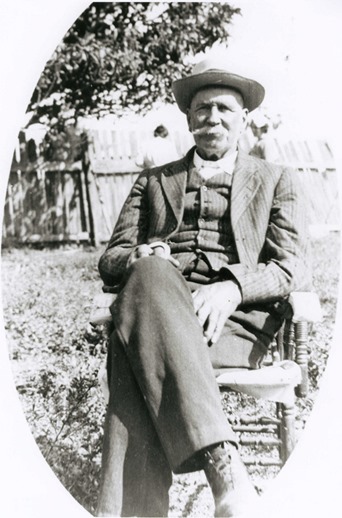
 1861. Tall, straight timber and the deep harbour attracted George Dent to Jervis Bay.


86-George-Dent-Senior

George Dent senior.

Huskisson once had a thriving shipbuilding industry, ships of all sizes were launched at the ship building operation on the banks of Currambene Creek operated by George Dent.

The museum has a fantastic display of tools and photographs from the era.
The floor of the display is made in the same fashion and materials as the decks of the ships built at Huskisson.


top-view hammer plane

672-George-Dent

George Dent Junior.

George Dent moved his family from the Georges River area to Huskisson in 1861. George had been a timber-getter for the boat-builders on the Georges River in Sydney. Two of his sons, George Junior and Joseph became boat builders while his other two sons, James and William worked in the bush finding and felling the right timber for the boatbuilding.
William Wood joined George Dent Senior in the first shipyard, and later set up his own yard with other shipwrights joining them over the years. In the 1880s, George Dent Junior set up a new yard, and at the turn of the century, Joseph Dent did likewise. It was in his shipyard that the Lady Denman was built.


113-Joe-Dent-and-Crew-2a 
Joseph Dent on the left and his shipbuilding crew.


image


11 January 2014

On this Day in 1933

220px-CEKSmith Sir Charles Kingsford Smith.
At 2.50am on the 11th of January 1933, The Southern Cross prepared for take off along Seven Mile beach at Gerroa, watched by a cheering crowd of more than 1000 people, some of which had their headlights on to assist with the take off.


Much of the Shoalhaven came together to celebrate the start of Sir Charles Kingsford Smith's historic flight from seven-Mile beach, Gerroa to New Plymouth, New Zealand in 1933.

smity seven mile

‘Smithy” as he was often called and his two crew completed the first commercial trans-Tasman flight in 14 hours and 10 minutes.

A local businessman then aged 10, recalls the occasion.
Read more

9 January 2014

On this Day

ALEXANDER BERRYJanuary 9th 1822 - Alexander Berry, in the vessel “Snapper” arrived at Shoalhaven.
He was prevented from entering by a line of breakers and so sailed 3 miles south to enter by the Crookhaven River. Finding the northern arm separated by some 250 yards of sand spit from the southern arm, the party “hauled the boat across”. He later returned in June 1822 to settle in the area.

 Alexander Berry (30 November 1781 – 30 November 1873) was a Scottish-born surgeon, merchant and explorer who in 1822 was given a land grant of 10,000 acres and 100 convicts to establish the first European settlement on the south coast of New South Wales, Australia.

This settlement became known as the Coolangatta Estate and later developed into what is now the town of Berry, named in honour of Alexander and his brother David.

In June 1822, Berry and Woolstonecraft purchased a small cutter, the Blanche, an old decked vessel of 15 tons and Berry returned to the Shoalhaven with Hume and assigned servants (convicts) Hamilton Hume, David Souter and Toodwit and Aborigine known to Europeans as Broughton, to develop his land grant there.

painting
This painting by Ian Hansen shows the loss of poor Davison and Kelly at the entrance to Shoalhaven River aboard the cutter Blanch at 4pm on the 23rd June 1822.


Cutter Description:
The Cutter during the 18th and 19th centuries was a small, single-masted vessel, fore-and-aft rigged, with two or more headsails, a bowsprit, with a mast set further back than in a sloop.

While attempting to cross the bar into the river in a small boat, two people drowned, including Davison, who was the boy that Berry had rescued from the 'Boyd'. Given the danger, Berry arranged to drag the Blanche across a sand bar that separated the Shoalhaven River from the Crookhaven River, with the Crookhaven entrance offering a safer passage. Hume then oversaw the digging of a canal in essence to keep the convicts occupied while Berry was away exploring, they eventually dug a channel two hundred and ninety yards long and 18ft wide at the surface and 4 ft wide at the base and an average  depth of 3ft, quite a feat using only hand tools, thus constructing the first land navigable canal in Australia.

berry-canal If you would like to see the Canal today, take the scenic trip across the Comerong Island Punt…what you will be travelling across is the canal..

Biography Read more
Coolangatta Estate history Read more

Holidaying at Moona, Moona Creek

1480-Huskisson-rs-processed Moona Moona was a popular holiday spot in the past, people camped right behind the inlet, these days camping’s not allowed, but you will always find a few travelers pulling up and using the park to rest in overnight.

8 January 2014

Wreck of the hive

Convict_ship_Neptune00 An example of the ships used to transport convicts around the time of the Hive.
This image is in the public domain.


I have dived many wreck sites along the coast, they are always exciting, you get this amazing feeling when you come down onto the remains of a wreck, of course not many wrecks look like the ones in the movies,  most timber wrecks have long since disintegrated, leaving only ballast blocks and some broken relics such as tiles,bottles and rusted iron and such, as time and the elements slowly disintegrate what little remains the opportunity for research slowly but surly disappears.

1837 the Convict ship the Hive, runs ashore south of Jervis Bay.
The Hive is one of the most significant wrecks in Australia, buried deep below the sand along Bhewerre Beach south of Jervis Bay.
Plenty of people have searched and done extensive research into the wreck but it’s exact location remained a mystery until 1994 when it was l
ocated under approximately two metres of sand and three metres of water, the buried hull was detected by Heritage Office Maritime Archaeologists using a magnetometer loaned from ADI Ltd.
With a little luck the sand has protected and preserved whatever remains. But the question still remains,.. how much is left ?

No one has seen the wreck exposed. “ that is, until recently”.
I was taking pictures at the old lighthouse when I ran into an old friend, the conversation turned to what I was doing at the museum, the lighthouse and the local wrecks.  While on the subject of wrecks he casually mentions he had been fishing a few weeks before Xmas from his jet ski on a flat day close to the beach at Bherwerre, when he came across the remains of timber ribs sticking out of the bottom in a couple of meters of water, he described it as large, dark and wide with ribs on both sides sticking right out of the sand. He hadn’t heard of the Hive before and was unaware of the significance of his discovery, or that he is probably the only person to have ever seen the wreck exposed like this. A few weeks had passed since his sighting, so the next day I went to the location he described, but there was no sign of the wreck. He said it would have been easily seen from the shore as it was so close and so big, I have done repeated trips to the location walking up and down the beach on the to few flat, calm, clear days, without seeing anything, It looks as if it’s disappeared as quickly as it came.

convict clothsThe sad tale.
After picking up convicts at Dublin then Cork in Ireland, the Hive departed for Australia on 24 August 1835.The vessel ran aground on a sandy beach during the night of Thursday 10th of December 1835. There appeared to be a dispute amongst the officers regarding sailing directions set for the night, the captain finally ending the debate by exclaiming, "One person is sufficient to navigate the ship!". Unfortunately he was soon to be proven wrong.

The only loss of life occurred when the boatswain was tragically drowned in the surf whilst trying to save a young crew member in difficulties. The young man himself washed ashore safely. Once word of the wreck reached Sydney, rescue ships were sent to pick up the remaining passengers, crew and convicts as well as the ship's cargo. The Hive soon became a total wreck.
 
And like all good stories, there is a twist.
The Blackbird.
The Blackbird,a small former Government schooner of 67 tons, was engaged to salvage the Hive’s stores and anchoring out in Wreck Bay used her whaleboats to ferry the bulk of the salvable stores from the  Hive . A sudden southerly gale blew up on the 15th January and with her anchors unable to hold her the Blackbird fetched up on the beach beside the Hive and became a total loss. Aboard was Captain Nutting, wrecked for the second time on Bherwerre Beach. The Captain walked back to Sydney for help.
Read more

After being involved in two ship losses in two months at the same location what was to become of Captain John Nutting.
Just one month later he was assisting the Captain of the Blackbird to remove stores from the Hive when the Blackbird ran into difficulties, and was run on shore as the only way of saving the crew. Captain Nutting returned to England on the Norfolk in February 1836 and a month later it was reported that he had been appointed to the command of the Avon owned by Captain Cole which conveyed oil to London.  The friends of Captain Nutting were much gratified at this appointment as they considered he had not been fairly treated in Australia since his misfortune. A Court of Enquiry was held upon his conduct in the loss of the Hive at which he was not even allowed to be present, the result of which was laid before the Governor; and about a month after, when all the witnesses had left the Colony, he was made acquainted with the particulars and decision of the investigation. The Avon reached Australia by the following April and returned to England with oil. On the 20th May she fell in with great quantities of ice, and were surrounded with ice islands for over a week during which time the sea appeared as one continued mass of ice at times almost impassable. On the 30th they rounded the Horn from which time they were clear of the ice. REF: Free settler or Felon.

The importance of the Hive
The Hive wreck site is representative of the period of convict transportation to Australia, and the interaction between survivors of shipwrecks and Aborigines. The ship, its cargo, crew, military personnel and convicts were part of the later period of highly organised convict transportation. It survives as a rare example of a vessel engaged in this trade. The hull is the main surviving artefact and has the potential to provide information about the construction and fitting of one of His Majesty's prison ships during this period

Gazetted Historic Shipwreck.
The Hive is a gazetted Historic Shipwreck, under Section 6 of the Commonwealth Historic Shipwrecks Act 1976. The listing applies to the shipwreck and all relics associated with the shipwreck.
Read more.
 Chain_gang_-_convicts_going_to_work_nr._Sidney_N.S._Wales

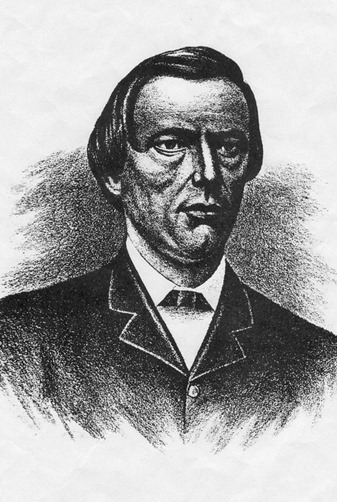
Here is a list of the convicts transported to Australia on the Hive in 1936, the crimes they were convicted for make interesting reading.

7 January 2014

Ian Hansen Marine Artist

ian hansen As you walk around the museum you will be amazed by the beautiful paintings illustrating our local maritime history.
Australian artist Ian Hansen's skill as an artist transports us back to a time long since past by bringing to life historically significant events with beautiful colours and subject matter.
Born in Bordertown SA 1948, Ian’s childhood years were spent on the foreshore of Hervey Bay. It was here that his deep love of ships and the sea developed.
Read more.

6 January 2014

Endless Summer

Wow that time flew,,,seems like yesterday they were busy as bees hanging artwork in the gallery, and now you only have a few days left to come along and see the art exhibition by JB Arts…
It closes on the 11th January…
see more

Twilight Markets 2014

The Lady Denman held the Twilight Markets on Saturday the 4th January, the weather was a little overcast but didn't stop a huge number of Visitors to the Lady Denman’s grounds.There were a large variety of Stall Holders and plenty of food stalls for visitors to choose from.

TM001 TM002 TM003 TM004

 TM005 TM006

Some of the images from the Video located at http://www.youtube.com/watch?v=jtyeUQYijSo&feature=c4-overview&list=UU_R7tNHlYo50zihH3rVkuAQ
On the Lady Denman’s You Tube Channel.

3 January 2014

On this Day.

3rd January 1980
The Lady Denman was towed by harbour tugs out through Sydney Heads into the open sea where HMAS Snipe was to take her into tow to Huskisson.  However, a southerly buster came in and HMAS Snipe fearing the Lady Denman would sink turned around (tow and all) and made it back to Garden Island. In increasingly worsening conditions off Sydney, HMAS Snipe can be seen here alongside the Lady during the aborted first attempt at towing her home.
 

1019 HMAS Snipe with LD

The final rescue attempt.

The words of John Hatton South Coast MP and Huskisson local.

"The Maritime Services Board wants us out but won't give us a clearance, and if this bloody thing ends up on Bondi Beach I'll be behind bars and you'll be down a ferry and an MP."

We tend to take a lot of things for granted in life, I remember visiting the museum many years ago and leaving not thinking too much about what it took to get the Lady where it is today.

After a hectic life  working on Sydney Harbour, the Lady Denman finally sits at rest, a beautiful piece of local maritime history safe and sound in a fantastic museum, but to get the Lady here, was an epic tale of determination, commitment, and risk.

Were these risks worth it, I think the Museum speaks for itself?

Read More about this fascinating rescue., I think I can see a good story line for a movie here!!!


1012-Trawler-Julianne-towing-LD-across-JB---a
The Trawler Julianne towing the Lady across Jervis Bay.


image

Cricket in the Grounds

IMG_1291IMG_1300

IMG_1299 IMG_1294

IMG_1295 IMG_1302

This afternoon a couple of families came into the grounds of the Lady Denman and had a challenging game of cricket. As the afternoon went on a few more joined in, just goes to show there is more going on at The Lady Denman Maritime Museum, then just a Museum.

2 January 2014

On this day

265-LD-in-Currumbene-Creek---a January the first - 1983 - The Lady Denman begins her final “tow” to her final resting place – behind a bulldozer up a channel towards what was to become the Lady Denman Maritime Museum.

January the second - 1998 - Declaration of Jervis Bay as one of two of the first marine Parks in NSW. The joint declaration was made by Minister for Fisheries Bob Martin and Environment Minister Pam Allan. Both Ministers were visiting the area for the occasion.

1122---a 281-Lady-D-under-tow--a 1122--a

Tomerong 1908


Awaiting the Governors visit

222-Tomerong-township-welcomes-governor 1908 Visit by governor hawkens road looking north.
Another amazing image in the museums collection.


image

Next Exhibition

Opens 18th January until the end of March.
Wind songs and Waterlines. Where is What is Wreck Bay?’

Artists from Wreck Bay will be holding and exhibition,.
This will be a most interesting exhibition and should appeal to our international visitors.

The exhibition will be a mix of traditional and contemporary art works in a variety of media.
Stay tuned – more details to follow

Below is an article about the history of the Jervis Bay Aboriginals.
Read more.

Whale hunting – Jervis Bay

whale-harpoon-4
It doesn’t matter how many time you see a whale, it will always be an amazing experience and will be relived in your conversations over and over.

Between the months of May and July whales can be seen passing Jervis Bay during their annual migration north to their breeding grounds in the warmer waters of northeastern Australia.
There are many places to observe this annual migration and one of the local favourites is the lookout atop the cliffs near the old ruined lighthouse in Broderie National Park.
During September and November the whales will be seen heading south on their return journey, many with calves. During their return many call into the bay, sometimes they can be seen a short distance off the beaches.  In 2012 a southern right whale confounded the experts and attracted large crowds of onlookers by staying just outside the entrance to Currambene Creek, the experts had all sorts of theories, it was resting, it was sick, it might have been attacked by sharks or hit by a boat, we heard it all, but the whale surprised everyone because a few days later it gave birth to a beautiful calf before moving off with its new baby to finish their migration south.

Jervis Bay has a number of tour operators more than willing to give you a close encounter with these magnificent marine mammals. Detail of these can be found at the visitor's centre inside the museum.


Types of Whales Hunted. There were two main types of whales pursued in our waters, the
Humpback (Megaptera novaeangliae) and the Southern Right Whale. (Eubalaena australis)

Other whales were also caught along our coast, the much rarer giant of the sea the Blue Whale was also caught and processed inside Jervis Bay.


hb


srw


Haunting whale sounds here.

’Bend ya backs and row me lads and take me to me whale”
In the past this annual migration was exploited by whale hunting companies.  Whale oil and other parts of the whale were a valuable resourse.  All of which can be replaced with synthetic equivalents now.

I didn’t know they hunted whales from Jervis Bay?

Whalers visited the bay hunting whales as early as the 1790’s right up until 1913.
Large whaling ships called into the bays sheltered waters during whale operations along the southern coast and reprovisioned their ships at Bristol Point.

_MG_4483
1790’s
Whaling was a messy, smelly and dangerous low paid job and when gold was discovered in the hills behind Jervis bay many of the ship crews would desert the ship hoping to strike it rich in the gold fields around Nerriga and Yalwal. Calling into the bay became less desirable for ship owners and eventually stopped.


cpt-william-kinghorn 

1840
Captain William Kinghorn set up a land-based operation on the northern side of the bay near Montague Point on the Mount Jervis property belonging to his father Alexander Kinghorn. There is an area of land between Culburra and Currarong named after the family,  Kinghorn Point, and can be accessed from the road out to Currarong. There are two streets named after the family as well, Kinghorn Street in Nowra and Goulburn. Captain Kinghorn in his 80's died in his home at Goulburn in 1878.

1859
It is unknown how long his whaling operation existed in the bay, but the Caroline was wrecked at Point Perpendicular and the crew made their way through the bush and came upon the station of James Kinghorn, Esq., “who’s superintendent rendered them every assistance”. so it appears that the whaling station was possibly still operating in 1859.

Read more - Captain William Kinghorn

 whale-harpoon6
1912 
The Norwegian factory ship the Loch Tay, plus three chasers the Sorrell, Campbell and Lionel arrived in the Bay to hunt whales with the full support of the NSW government. During the opening season they harpooned 158 whales.
Their eventual take totalled 537 whales in two seasons, but they were forced to close because of the strong odour which drifted across the bay  during the summer northeasters, reaching the Royal Australian Naval College (HMAS Creswell) and Huskisson.  There were also complaints about the putrid offal floating in the bay which attracted large sharks and made the navy’s training operations dangerous.

ih


One of the beautiful paintings by Ian Hansen on display in the museum, depicting whale operations near Bristol Point.

1917

Records show there was also a small whale hunting operation running on the southern side of the bay, near Bristol Point and Greenpatch, this operation may have been used to supplement the fishing families income.

whale-harpoon5


1919
An investor Mr Moore, was willing to spend large sums of money to set up another large land-based operation in the bay. With the experience of the previous operation and after correspondence between the NSW Premier and the serving Prime Minister William Watt, the Prime Minister stated!
“it would be unwise to permit the establishment of a whaling station which is in close proximity to the Naval College  HMAS Creswell" and with that, all whaling from Jervis Bay ceased.

 whale-harpoon-2
Today: Fortunately for us all, most countries have ceased whaling operations. In the oceans close to Australia the Japanese are still conducting operations under the ridiculous facade of research.
Despite this the whale population around the world is slowly recovering, but sits on a knife edge, with more pressure being applied to the few remaining whale hunting countries to stop operations. Hopefully we will see some common sense and a return of large numbers of these amazingly beautiful creatures to our oceans.

The museum has a fine collection of equipment and information on display from the whaling industry, some can be seen on this page,  pay us a visit and take a walk back into an era long since past!

bone-ship
One of the museums finely detailed model of a ship made from whale bone.


Continue reading about whaling in and around Jervis Bay.

REF: Read more:


image

31 December 2013

Shoalhaven Landscapes

I added another couple of images of this amazing area to the landscape page.
Read more

Twilight Markets

TWILIGHT MARKETSThis Saturday the 4th Jan, we have the Twilight Markets at the Museum lots of stalls and family fun…pack a picnic and sit on the Museum green and enjoy the music.
Starts at 4pm -8pm
Read more

30 December 2013

Jb Arts Exhibition

painting-one Now Showing.
Currently showing in the Vera Hatton Gallery we have a collection of paintings and sculpture from a selection of Shoalhaven Artists.
There is a mixture of landscape,contemporary, and abstract artwork.
Most of the artwork is for sale, so come along and have a look and maybe buy yourself a unique piece of local artwork.

painting-two p3 p4

These photo’s show small snippets from larger works.