.

.
HOME OF THE LADY DENMAN - Local history isn't always about the big story - the everyday story of life in the early development of the region can be a fascinating, entertaining and educational journey.

5 March 2015

“They both admitted they had eaten the unfortunate wretch” 1801

 
image

Early explorers sailed the seas with the ever present danger of being wrecked far from home on a hostile shore, their prospect of surviving  such an incident on a foreign land would have been remote.
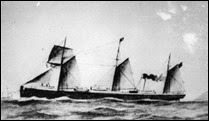
Following is a extract from a story aboard the Lady Nelson as she explored along the south coast of Australia.

image The Lady Nelson, under the command of Lieutenant Grant. R.N., put into Jervis Bay, where he remained four days.

image

 Read More on the story of the Sydney Cove.

4 March 2015

Can you help?

The museum is always looking for old photographs or objects and articles from the area, the surrounds, family or of historical events.
If you have anything you think may be of interest to the Museum, please don’t hesitate to contact me here.

Rob @ yourcontributions@gmail.com

Please don’t let them wither away until it’s to late….all contributions are treated with respect and care.


March sunrise

bay-in-march

So far March has provided some beautiful days, what better way to start you day than a stroll along the beach and watch the sun rise over the bay.


Collision near Beecroft point – ketch founders, crew member lost.

Sunday March 1882 1.30a.m.

image

MARINE BOARD INQUIRY
An inquiry was commenced on Monday into the circumstances surrounding the collision between the Steamer Kameruka and the ketch Esther Maria, six mile north of Beecroft Point,   and the loss of seaman Charles Greenwood.


A tragic loss of life.

Archibald Dawson,  master of the ketch, stated that the Esther Maria was sunk by the collision and that Charles Edward Greenwood was lost in her ;  the man was below,  and the witness called him,  and told him to come on deck as quickly as possible ;  Greenwood answered, and the witness heard him move as if he were coming on deck  ;  the witness got up on the main-rigging and so got on the steamer,  and he heard a cry in the water which might have come from Greenwood ;

Witness Statements.
When he saw the steamer's light three points to the port bow, he saw that his own red light on the port bow was dim, and he took it out to prick it up;
he was replacing it when he saw the steamer coming into him,  and had no time to get into it's place;

The steersman was known as Dick,  and the witness was keeping a look-out walking about aft,  the vessel going about 5 knots;  he came on deck at 12,  but did not look at the lights;  when he saw the steamer, she was on the lee bow,  and he saw her red light;  he also saw the masthead light which looked dim;  The only way he could account for the collision was that the steamers course must have been altered;  he did not alter his course and then saw all three light coming straight into him,  seven of eight minutes after he had seen the red light and masthead light;

When he took the red light out to trim it,  he took it down below,  but was as quick as possible with it;  the vessel continued it's course until she was struck,  and he was certain the green light was burning,  though he did not see it;  The Kameruka lowered her boats,  and remained near the scene of the wreck for four hours;  he could not account for the missing man Greenwood being lost,  for he had a better chance than for some those that were saved.

Steven Bishop,  master of the Kameruka’ evidence was heard.

The vessel was on a voyage from Eden to Sydney at the time of the collision;  the weather was hazy,  and there was a fresh northerly wind;  The Kameruka was uninjured;  he was on deck at the time of the collision;  steering N. by W. by the bridge compass;  there was a lookout man on the bridge and nothing to obstruct his view;  at 1.a.m he left the deck,  telling the second officer to blow the whistle if he saw anything;  he heard the whistle and ran on deck,  found the engines stopped,  saw the ketch luffing-to on the starboard tack,  and thought it was a vessel on the starboard tack;  his helm now was hard-a-starboard but he saw it was to late to avert the collision;  he afterwards remained on the spot until 6.30 a.m to endeavour to save life; 
When he got on the bridge he saw the ketch close down on the starboard bow,  but he could see no lights, though he looked for them.

James Whatt,  second mate of the Kameruka,  and officer of the watch at the time of the collision,  gave similar evidence.

As to the absence of light on the ketch,   and the efforts of himself and the master of the steamer to avoid the collision;  when he sounded the whistle the little vessel shot into the wind and came towards them,  and he stopped the engines;  after the collision occurred,  and he saw to men clambering up over the bow,  he said,  'Why didn't you have your light burning?"   and one of them answered " They went out sir!"

Andrew Jansen,  lookout man on the Kemeruka at the time of the wreck,   collaborated the second officers evidence.
And added that when he saw the ketch he could not tell which way was she was going.

The second mate said she was running before the wind,  but as they got close to her she tried to cross their bows,  and the collision occurred;  she had no light showing.
William Jackson,  steersman of the Kameruka,  stated.

The course steered at the time was N by W. ;  after the collision he said to the captain of the ketch,  " You had no light out";  he said,  'No one light was out, and I was down trimming the other,  the red light";  He also said when he came on deck with the red light he saw the steamer,  which was to close to allow him to do anything;  he then dropped the light,  pitched his coat off,  ran to to cabin,  called the mate,  and then went forward to call the men;

The witness asked one of the men belonging to the ketch who was at the wheel,  how he was steering and he answered S. by W. ;  the witness said that was impossible ; the man answered,  'When I heard your whistle I saw the steamer,  and left the tiller,  ran to call the mate,  and then to the forecastle to call the men."

Final Judgment
After consultation, the board found that the collision was caused by the wrongful act or default of Archibald Dawson, master of the Ketch Esthter Maria, in having committed a breach of article 6 of the regulations for preventing collisions at sea, by not exhibiting proper lights, 
and to show cause why his certificate should not be suspended of cancelled
His license was subsequently suspended for a period of 3 months.
No blame was appointed to Captain Bishop or his crew for the collision.
 
Ketch Esther Maria.
Built Hawksbury River 1867. Wooden Vessel.
Owner: W. Grono.
52 tons.
69ft long x 18 ft x 6.6 ft hold.
Two-masted fore-and-aft rigged.
The first mast taller than the aft mast.
Steerage behind the aft mast (The mizzen mast)
Crew of 5 on the trip above.
ketch
S.S Kameruka
Built 1880.
Owner: The Illawarra Steam Navigation Company.
Gross tonnage 515 tons –300 tons net.
179ft 6 inches long
24ft at the beam and eight ft hold

image

S.S. Kameruka finds wreckage of foundered ship near Montague Island. 1880

The S.S. Kameruka  saw an unidentified sunken vessel at 5am on the morning of the 11th, located south west of Montague Island, as it passed on a voyage to Tathra. Captain Walker stopped his vessel and inspected the wreck. At this stage, only twenty feet of the mainmast and the tip of the mizzen mast stood above water. Attached to the mizzen was the remains of the vessel’s ensign, reversed as an indication of distress. After removing the flag and recording the depth as 15 fathoms (28 metres) of water, the Kameruka continued to Tathra and telegrammed Sydney.
Read more.
.

S.S. Kameruka  - A total wreck. 1897
image

15 years after the collision as reported above, the Steamer Kameruka was ashore on Pedro Point about two miles from Moruya and became a total wreck.

image

pic reference
The wreck of SS Kameruka on Pedro Point reef of Moruya Heads in October 1897. The cradle used in the rescue of all crew and passengers is still standing in the heavy-breaking seas. The photograph was taken by “Wood of Bega”.

http://www.batemansbaypost.com.au/story/1024621/story-behind-a-midnight-wreck/

2 March 2015

A forgotten Town


The Sydney Morning Herald – Tuesday 13 October1908
Shattered dreams, withered hopes.

Extracts from an article that appeared in the above mentioned paper, by a Sydney correspondent reminiscing about South Huskisson (Vincentia) and a general description of Huskisson and the District  when he visited the region in 1867.


'With the exception of Sydney Harbour,” says the ‘'”Nautical Almanac,” ‘'Jervis Bay is perhaps the most perfectly protected sheet of anchorage water in Australia.”

”Anchorage for “ironclads” sounds well for the Federal Port.  Indeed, Jervis Bay is now used chiefly by the ships of the squadron for gunnery.  The men do not land.  But many of the officers say that they enjoy their trips down there, and the wallaby shooting along the wild, beautiful harbour side, actually better than their time in any other port in Australasia.”


Whale in the bay.
”There was whaling in the old days at Jervis Bay – a small town of solid houses just inside the hook of South Head.  The warships anchor at least half a mile from the North Head shore, in “Montague Roads.”  But the safest anchorage is Darling Roads, close under South Head, and Bowen Island.”     There was the old town of South Huskisson.    

 
  whale in the bay  
 

What with whaling and the big timber along the shores, a large ship-building industry sprung up there.  Mr Hardiman who builds ships there for many years, went to Jervis bay in the 60’s.”


  1449-Boat-frame  
 

“The old town was dead when I went there’'. The houses were still standing, and the fruit trees still growing around them.  But doors were broken in and the windows.  There’s nothing of it left now except one big Norfolk Island Pine by the water there,  a long mound which they say was a baker’s shop,  and a few tumbled stones on the beach that look as if a pier may have been there.”

”Jervis Bay in a wonderful big stretch, 8 or 10 miles across.  Just to the south of it is another beautiful basin,  St Georges Basin, nearly landlocked, but not very deep. It opens into Wreck Bay.”

”It’s well called Wreck Bay. The old lighthouse used to be on South Head, where it could not be well seen,  and ship after ship made into Wreck Bay by mistake.   I remember the Walter Hood – an Aberdeen clipper she was – went down with almost all hands on a reef there one awful night. That same storm swept away the farm land on the Shoalhaven River.   I saw the black mud spread over the flats there, and men prodding it with sticks to find the bodies.  The Corangamite and the Rose of Australia were lost there too; and the juniper, coming round with wine; her hull use to wash out occasionally and get covered again. The Plutus – she was wrecked off North Head.”

”As for a railway from inland to the coast, there is no road running to Old Huskisson.  The Old Wool Road used to come down there from Braidwood.   I suppose the old teams bought the wool that way over the Jerrawangala Gap – I think it was – and across to Wandandian and St Georges Basin; and from there to Huskisson,  But the Old Wool Road is overgrown now;  I doubt if you could follow it through the farm lands there.  One or two of the piles of the old wool stores still remain – that’s all.”


Bullock_team


This typifies the type of scene people would have seen as the Bullock teams bought Wool from the Southern Highlands along the Wool Road to South Huskisson. (image public domain)


”The warships get their stores from N. Huskisson at the head of the Bay.  The stores come through by road from Nowra.  North Huskisson used to be a town with a school of 30 children.  That was before the timber was cut out, and when the shipbuilding was brisk.

There is no school there now.  There are not enough children to keep it going.  They go to Tomerong -  a dairying village five miles away.    The main road there – the only road to speak of – is the road from Nowra to Braidwood.”


The remainder of the story related to Canberra and the surrounding district.
But one small item of interest remained, it was the official description of the Crown Lands of Jervis Bay in 1867.


“Jervis Bay itself is 87 miles south of Sydney.   It’s shores are almost uninhabited.”


HMAS Creswell

The Royal Australian Naval College located at Jervis Bay has been the hub of naval officer training for many years. This short video records training at the college during the late1960s and also features the destroyer escort HMAS Derwent.


27 February 2015

10th Anniversary of the Huskisson Triathlon 2015

Untitled_Panorama1

Jervis Bay turned on a beautiful morning for the first swimming leg of the 10th Anniversary of the Husky Triathlon Festival.
Untitled_Panorama1
The crowds were starting to seek advantage before the bike riders arrived.

26 February 2015

These tablet bottles are part of the museums collection.
BEX

The most recognised and infamous bottle of the three would be the Bex Tablet Bottle.

Bex was recommended for headaches, colds and flu, all nerve pains, rheumatism, and for “calming down” the overexcited.
Heavily promoted in the 50’s and 60’s as a safe way for housewives to “get through the day”. It took a newly arrived South African doctor in the 1960’s Pricilla Kinciad-Smith to recognise that these substances were addictive and that the large doses taken by habitual users was causing widespread kidney disease.
Over the counter medications were banned in 1977.

Ref: http://trove.nla.gov.au/version/210448439
Saltose, was used to help prevent excessive perspiration causing heat exhaustion.

25 February 2015

Point Perpendicular

point-perp

East Coast Lows

Near cyclonic storms have caused devastating damage along the East Coast of Australia.
They have been recorded ever since Cook first sailed along the East Coast of Australia in 1770.
One such “East Coast Low” in 1876 claimed the S.S. Dandenong, foundering in a storm just of Jervis Bay.   Despite the courageous efforts of the Dandenong crew, and the crew of the Barque, Albert William,  she disappeared during the night below huge seas, and with it, 40 poor souls crossed the veil of dark silence into the deep.
This storm became known as the “Dandenong Storm”.
Reported winds of 240k’s an hour,  with 15 meter waves.
11 other vessels were lost during this storm.

SSPrevious post about the S.S Dandenong. Read More.
 

Massive storm and large waves hit Jervis Bay 1974.
“I remember one such low in 1974,  my relatives, and local people used sand bags to try and stop the huge seas in Jervis Bay washing away foreshore houses at Callala Beach.
         “I'm not sure how many people who experienced that storm are still living, and still own houses along the foreshore,  but I'm sure the new residents that live along the beach front have no idea just how close some of the houses came to being lost into the Bay”.
         “There was severe damage around the foreshore of the bay, with massive seas hitting the reefs and shoreline. Callala Beach had a 10ft vertical drop just behind some of the houses, and had lost a complete sand hill that was originally in front of the houses”.

 
The 1974 storm was known as the “Sygna Storm” Named after the 53,000-tonne Norwegian bulk carrier Sygna.
.
MV_Sygna_1974
All ships anchored off the ports were advised to head to sea. Seven of the 10 ships anchored off Newcastle immediately did so, but Sygna remained at anchor.

By 1am the following morning, the wind had increased in strength to 165km/h and, with the huge seas and a lee shore, the captain decided to sail. He weighed anchor and the ship got under way.

He was too late. Even with her engines full-ahead, Sygna was unable to make any headway and the force of the storm turned her parallel to the beach. Within 30 minutes she was aground on Stockton Beach.

Becoming Australia’s largest wreck.
The rescue of the crew is a story of courage and daring in adverse conditions, see the link below.

REF: http://www.defence.gov.au/news/raafnews/editions/4807/history/story01.htm

20 February 2015

An English syndicate visited Nowra in connection with establishing a large timber block street paving industry at Jervis Bay.

The heading above came from a previous post about some of the industries that could have developed in the region, but for one cause or another never eventuated..
Continue reading

I had never heard of ‘timber block roads” before, so i looked it up. Here is an extract from a web site called “Sydney Vista” it makes interesting reading.


First Woodblock Paving

Sydney City Council began to use woodblocks as a road surface from the 1880s. By 1900 much of Syndey from Broadway to Dawes Point and from Darling Harbour to Kings Cross was paved in woodblocks. The last woodblocks were laid during the 1930s. The use of woodblocks for road surfacing had been tired in Britain and the United States but was found to be unsatifactory, possibly due to rot from higher rainfall and the use of poorer and more common softwoods found in these countries.

The section of George Street between Dawes Point and Argyle Street was paved in 1888 and used to trial various timbers for woodblocks. Sydney council also experimented with the use of tar and pitch, block spacing, bedding and surface finishing. The best timbers were Australian hardwoods including blue gum, red gum, jarrah, blackbutt, tallowwood, karri and turpentine.

The blocks were brick shaped and laid in stretcher bond pattern. The surface of the woodblocks was top dressed with tar, peagravel and sand to provide a firm surface and improve traction. Consequently George Street North did not require maintenance for five years, proving the cost and labour effectiveness of woodblock paving.

Woodblock paving, Sydney, George Street

The gradual replacement of horse and cart with much heavier automobiles saw an increase in wear of the woodblocks. They were progressively removed from most parts of the city and replaced with asphalt. The woodblocks were great for firewood and during the Great Depression young boys were often caught helping themselves to one or two to heat the family home and cook dinner. The Council also gave redundant woodblocks to the elderly and poor.

Not all the woodblocks in The Rocks were removed. Some remain under the asphalt in sections of George Street. During footpath widening works, woodblocks were uncovered and found to be in very good condition. at least 80 years after they were first laid. Wherever possible the blocks are left in place for future generations to discover.

The original woodblocks were finished with tar and pitch mixed with pea gravel. Tar and pitch are now identified as a health risk and are not permitted in contemporary building works. These materials have been substituted with bitumen emulsion which looks and performs like tar.

 
Sydney Vista Web Site.
 

19 February 2015

New museum Image

This weekend marks the beginning of a new chapter in the history of the Museum.
A new signage plan has been implemented, The old signs that have graced the entrances on Dent Street and Woollamia Road for over 15 years have come down, and tomorrow will see work start on new signs erected in their place.

A new web site will be launched and most important a new name.

for-webThe museum will be now know as The Jervis Bay Maritime Museum.

New Colours, new fonts,  It’s a positive change designed to take the museum into the future, while keeping pace with today’s trend in museum development.


Over the last few months  there have been many changes and developments, new solar panels grace the roof of the museum and are providing all the power the museum needs and more, The Halloran Collection is undergoing restoration, one piece at a time, new exhibitions with a more professional approach have everyone involved excited about the future, promotion of the museum is an ongoing problem, where best to put the limited money available to get the best possible returns, our marketing manager has been updating local adds to fit the new image and has been instrumental in driving some of the changes.

As we go forward everyone involved has worked hard to get us to this point, and with the support of the volunteers the future looks bright.

Arthur-Boyd-Outdoor-Flag-Banners(1) We have some exciting exhibitions coming up, starting with the Arthur Boyd Exhibition opening on the 28th February.
Come along, see the changes, and be inspired by the beautiful works of art on display.

You may never get to see this exhibition as it is again.

Please adjust your bookmark.
The blog site’s URL is now
jervisbaymaritimemuseum.blogspot.com

Handa Isle 1918

The Mystery of the missing Handa Isle
StreamGate

Image free of copyright

Wreckage washes up on Chinamen’s Beach Jervis bay.

Several Months after the barquentine Handa Isle went missing on a voyage from Sydney to Melbourne, wreckage was found washed ashore on Chinamen’s beach inside Jervis Bay.
News of the wreckage quickly spread via the press of the day.

 The Mercury (Hobart) Monday 11 November 1918

The greater portion is painted white and the remainder red.   The wreckage appears to have been in the water for several months.
Shipwrights, fishermen and others who have seen the wreckage express the opinion that it is from the missing vessel.

More Wreckage Found.
A deck house found floating at sea by a Sydney Tug has been identified as that of the missing schooner,  and it is thought to have been torn off by the explosion of the petrol cargo.

The Sydney Morning Herald  Friday 14 February 1919

Identification of wreckage.
Mr. Sangster, inspector and surveyor to the Navigation Department.


“I beg to report having on February 12 examined the mast which was reported lying on Chinamen's Beach, Jervis Bay.
     I found the dimensions in accordance with constable Hinds report, vis., length 19ft,  (11 feet below deck, 8ft above),  Diameter 18in, girth 54in, spider band with six belaying pin studs.
     “I have no doubts whatever that this spar was the main mast of the Handa Isle.  It fits with the vessel's depth of hold, vis., 12 feet,  and I have a recollection of seeing the same spider band when I was last on board the vessel”.
     “I found that the mast has been burned through from the deck to 8 feet up, with no sign of fire below deck.
     “From the information I received,  I visited a boat-shed at Huskisson, Jervis Bay, and examined a board 18 feet long, 14 inches wide and 1 inch thick, of Queensland maple.  It is scorched all along one edge,  and was picked up by a fisherman at Jervis Bay”.
     “As the Handa Isle had a shipment of Queensland maple boards of the above description,  there is little doubt that they are a portion of her deck cargo.
     Although the mast extended from the vessel's keel through a full cargo of Benzene, no sign of fire is to be seen on the mast below the deck”.


  http://upload.wikimedia.org/wikipedia/commons/thumb/1/18/Belaying_Pin_(PSF).jpg/300px-Belaying_Pin_(PSF).jpg

Belaying pin studs.


image Spider Band - a metal band with many eyes, usually welded, fitted around the masts and spars of square-riggers and other ships, used with iron belaying pins.

 
The mystery deepens.

Examination of the mast only deepened the sadness for the families, it didn’t provide the answers for family and friends of the missing seamen, the burnt and charred remains only added to the mystery of the Handa Isle.
.

Unanswered questions: The remaining question was - If the petrol had exploded below decks, wouldn’t the mast have been burnt below the deck line?.

At this time I haven’t found any more information about this tragedy, if you have further information, please contacts us at the Museum. yourcontributions@gmail.com
.

German mine.
One theory put forward was the ship was sunk because it hit a German Mine.

Mines were a constant threat during World War one, placed along the east coast by German Submarines, they were responsible for sinking many ships.
At first the Federal Government denied the existance of the mines, after the steamers Pt. Kembla and Cumberland were lost, the government tried to cover the loss by offering a reward of 5 thousand pounds for evidence that would lead to conviction of the persons responsible for the explosions which caused the foundering of the vessels. This offer was quickly withdrawn, and there was no objection to the publications reporting that the explosions were due to enemy submarine miners.

Mines were a threat for many years after the war, with one floating mine reported near Montague Island in 1920 Trove.

I guess we will never know what happened to the Handa Isle, or the missing crew, who went to sea and never returned like so many other seafaring men.

 handa-isle

Image free of copyright

Handa Isle -  275 tons. Built at Auckland. 1881. Had Benzene cargo and wood.
Commanded by Captain W.B.Taylor, of Hobart, and a crew of eleven.


18 February 2015

Some things haven’t changed.

IMG_0549


Appreciation of the simple life – Huskisson 1891


Huskisson Public School a brief history.
Huskisson Public School first opened as a half-time school in 1871, On April 21st that year an application for a provisional school was lodged with the Council of Education and it was signed by the following: C.Murray, farmer; Messrs Isaac Lee, light-keeper; E.Honner, fisherman; W.Dent shipwright; G.Dent, sen., timber merchant; Les Dent; Jacob Peak, carter; and John Matthews, shipwright.
    This application was later altered to one for a half-time school, to be worked with New Bristol, 12 miles distant. 
    The road between Huskisson and New Bristol was not negotiable in very wet weather, and the residents promised that, at such times arrangements would be made to convey the teacher from one school to the other on alternate days by boat.  They also agreed to erect a suitable slab building at each village for school purposes.  The nearest post office at the time was Tomerong, about 6 miles distant, and this served the needs of all residents of Jervis Bay.
     The application was sanctioned and the school officially  came into operation in September, 1871.  Mr R.S Mackenzie being appointed as teacher.
     Mr Mackenzie was popular in the district, and had conducted school at two places concerned for three months without remuneration prior to his appointment by the Council of Education.  The school was converted to public in 1882.
    The enrolment for the first year of the schools existence was 15, and the average attendance 12.

image

image


The Shoalhaven News and South Coast Districts Advertiser 1891.

On Tuesday last, 6th inst., the teacher, Mr J.J.Emery, assisted by the residents, united in giving a school treat to the pupils of the public schools at New Bristol and North Huskisson (Jervis Bay).
Notwithstanding, the excessive heat of the previous week and the numerous counter attractions of the surrounding district to the picturesque rendezvous of Jervis Bay, the day passed off most successfully to both young and old.   Ere noon arrived, vehicles from Tomerong, Nowra wended their way to the school grounds until not less than 100 persons had assembled.
The site could not be excelled, owing to suitableness of shed and awning, lovely grounds, and plenty of cool water.
Luncheon was provided by Mr James Dent (3), Newman, and Deutschbein, and ably assisted by the Misses Wood (3), Dent and Emery.   After ample justice had been done to the many good things provided,  the adults united in several amusing games, the principal of them being ‘rounder's,” “drop handkerchief,” “jolly miller,” “disappointment,” and “bachelor in search of a wife,”   These over the children were amused with several races for pocket knives, rounder balls, lollies and cricketing gear, one of the most pleasing being a race by the adult ladies.  The last, but most exciting was the race for the bachelors cake, which was won by a Tomerong lad.  The lady providers were each presented with a duple piece of glassware.   Tea was again supplied in order to allow those from a distance to reach their homes in good time.
Sports were then resumed by those who had not dispersed, and kept up with great vim till darkness ended the day’s enjoy.  The people of Jervis Bay are to be complimented upon the manner in which they originated this their first school treat, and the unanimous way they carried it out, as was manifested by the cheerful countenances of those who assisted and by the presence of those who came from long distances.   It is hoped the same unanimity may always prevail, living in hopes of witnessing the same pleasing assembly in time to come.

What I find interesting in this story,  they were giving away pen knives as prizes to the children, as you know if your found with one in you possession now, it will be confiscated and you could be fined, how times have changed in many small ways.
.
Below is an add from the same newspaper – talk about being diversified…
image


16 February 2015

With a bit of good fortune.


 image of ship Photograph – Alan C. Green.  State Library of Victoria – No copyright restrictions apply.

Despite a long history of shipwrecks from the sailing ship era and repeated articles and dispatches to ship owners and captains warning them of the dangers involved in plying the coast about the Wreck Bay and Jervis Bay area, ships continued running into trouble inside the treacherous bite of Wreck Bay and around the uncompromising coast of Jervis Bay.
    Other than the ability to proceed faster without the need for wind, early coastal steamers still suffered with limited navigation and communication equipment, combined with poor weather or in some cases a lack of due care, steamers of all sizes followed on from sailing ships in the past, becoming victims of the notorious part of the south east coast known as Wreck Bay.

painting Artist – Alan C. Green.   State Library of Victoria – No copyright restrictions apply.


Newcastle Morning Herald and Miner's advocate, Friday 20 1889.
image


“The steamer Norkoowa 1074 tons, owned by Mc’Ilawraith and Co., of Melbourne, and which has for some time been involved in the coal trade between Melbourne and Newcastle, is ashore in Wreck Bay, near Jervis Bay.  The steamer Kameruka went to her assistance, but failed to tow her off.  Another attempt is to be made this evening, and the weather is fine,  and more powerful vessels are to be engaged, it is anticipated the attempt will be successful”.


In this case the Norkoowa’s luck was with her, despite being high up on rocks, the weather had remained relatively calm and she avoided the fate of so many previous vessels that found themselves in a similar situation.

Successfully Refloated.
Friday 10.30am - The S.S. Commodore reached the scene after a hard and dirty trip overnight from Sydney, The Commodore put to immediately and set about trying to haul the Norkoowa off the rocks,  after repeated attempts and little progress, the Commodore left for Ulladulla for more equipment, returning the same day.

Saturday morning – They tried again and managed to haul the steamer 20ft astern and 8ft brestward. 

Sunday morning – The S.S Aldinga arrived at 3a.m with more salvage equipment.
At 5a.m. the Aldinga and Commodore took hold, and at 7.15 a.m. the Norkwooka was afloat in deep water.


“There was a good deal of swell in the bay, which had a damaging effect on the stranded vessel, causing her to roll from bilge and fore and aft heavily.
Afterwards steam was got up and the three steamers went around into Jervis Bay.
After anchoring there she called the Commodore alongside, as the water was gaining in her afterhold  also forward”.


The Norkoowa's heavy bumping on the inhospitable shores of Wreck Bay had evidently damaged her hull to a greater extent than was first supposed.

A later telegram stated that it was hoped temporary repairs could be effected for making a start again on Monday for Sydney, where it is proposed to dock and overhaul the steamer.

Norkoowa's pumps were unequal to the work of keeping the Norwooka afloat.  At that juncture the pumps and gear taken down in the Aldinga by Captain Hall came into valuable use.  The centrifugal pumps were put on board the sinking vessel, and by that means and a pump from the Port Jackson tug-steamer Commodore, the water gaining  freely below was overcome...

The steamer Alinga will stay by the damaged vessel, and will escort her up the coast to Sydney.


The captains and crew of all the vessels involved were complimented upon the efficient manner with which they carried out instructions.
“The whole crew exerted themselves to the utmost of their ability in the arduous work in connection with the successful floating of the steamer”.


Specs: A screw steel steamer of 1074 tons net.
Length 250ft
Beam 35ft 2in.
Depth of hold 18ft 7 in.
Built at Newcastle-on-Tyne in 1885.
Commanded - Captain J. Jackson.
General description: She is a thorough collier, without and pretentions to fine lines or passenger accommodation.
Probably insured.

1912 - The Norkoowa was eventually broken up in Bombay.

Ref: http://www.tynebuiltships.co.uk/N-Ships/norkoowa1885.html
    http://digital.slv.vic.gov.au/view/action/nmets.do?DOCCHOICE=2738085.xml&dvs=1424126801575~724&locale=en_US&search_terms=&adjacency=&divType=&usePid1=true&usePid2=true

15 February 2015

Violent, unrelenting spectacle across the headland of Jervis Bay.

Saturday 14th Feb 2015, for around an hour this storm the likes I have never witnessed before, travelled slowly across the headland of Jervis Bay, this was shot shortly after midnight. Lightning shot vertically from the tops of the clouds, interspersed with horizontal lightning, and the occasional vertical streak from the bottom of the clouds to the sea. The whole sky was alive with a non stop light show.

IMG_2607


14 February 2015

Jervis Bay - A beautiful start to the day.

moona-feb-2015g

The beautiful thing about a sunrise, it’s absolutely free.


Through fire and storm.

Ref: The Newcastle Sun December 1933.
The fishermen know that the sea is dangerous and the storm terrible, but they have never found these dangers sufficient reason for remaining ashore.    Vincent Van Gogh

image

Badly burnt, and forced to abandon their blazing launch off Bowen Island, two men had a nightmare journey through seven miles of rough seas to Jervis Bay, in a waterlogged dinghy, their only “oars” a piece of board  and a stick.
Only a strong south easterly wind prevented their tiny craft from being swept through the heads to sea.

1933 – Two men Collins and Lane set out from Huskisson on a 30ft launch valued at 450 pounds which had been used by visitors for several months.
They developed engine trouble outside the heads about 10.30 p.m., they decided to return to Jervis Bay.
BACKFIRED
Near Bowen Island the engine backfired, and the craft immediately burst into flames, trying to extinguish the fire both men were badly burnt.
    The flames extended rapidly and it was apparent that nothing could save the launch, so the men decided to take to the dinghy.
     Desperately the men hauled it aboard the blazing launch, but they were not able to completely empty it before they were forced to scramble into it, for the launch was now blazing from stem to stern.
OARS LOST
Their oars a piece of board and a stick, they tried to steer for the old naval college buildings at Jervis Bay, but lost their bearings when the lights went out at midnight.
    Using their improvised oars to keep the dinghy with the wind and current, the men reached the beach at Lambs Point, three miles north of the college after 3 a.m. exhausted by their terrible experiences.
     At lambs point their burns were treated, and later they were driven to Jervis Bay.  Later they left for Sydney for further treatment.
     It is believed the launch has floundered.

 Ref: The Newcastle Sun December 1933

13 February 2015

Proposed quarantine station for Jervis Bay.

1918 Influenza killed 111,000 people across America.
Fears for Australia.
With the quarantine station located at North Head Sydney becoming inadequate to cope with the increase in immigrants, returning soldiers and ships crews infected by disease, and the fear it could spread throughout the population, a proposal was put to governmant to build a quarantine station away from Sydney at Jervis Bay.

1918 - Despite Jervis Bay being found unsuitable for the station in 1918 it was still being promoted by interested parties.

1919 - In promoting the idea -  Dr. R. Arthur wrote.


"Now is the time if ever, for a beginning to be made with a quarantine station on the northern headland of Jervis Bay. Influenza is raging more fiercely than ever in Britain, and we may assume,  therefore,  that for many months to come ships will be arriving here,  with possible infection on board.

Speaking of the proposed site and lack of conveniences.

'It is certain that the vast majority of people would gladly put up with the inconvenience and discomfort, such as living in a rough camp under canvas would involve."

Speaking of the possible lack of water for the site.

"If not sufficient quantity could be bought from the other side of the bay.  If water could be bought under shell fire to 50.000 men on Gallipoli, there should be no difficulty in providing it at the proposed station.

Those quarantined could occupy themselves pleasantly in bathing, fishing, exploring the bush, and ground could be cleared for outdoor games.  If thought advisable, a canteen where light beer was sold could be established,  and there could also be an open air picture show."

It sound almost enjoyable.

 
1919 - A large Parliamentary party boarded a special train in Sydney and travelled to Jervis Bay to inspect the site of the proposed Quarantine station.
image

The party received a lot of criticism in the press, for being un-necessary and huge waste of taxpayers money on accommodation, transport and extravagant food, it comprised close upon 100 people, including members from the Federal Parliament and State Parliament and confusingly, members from Queensland and Victoria.


The daily Commercial News and shipping list 1919.
“After all the trouble and expense incurred in this expedition, there seems to be little hope of any part of Jervis Bay being selected as a quarantine station.”

 
map

The party travelled down to Bomaderry by special train, They spent the night in Nowra, next morning, travelling by cars to Huskisson.  “Practically all the private cars in the district were engaged in the transport of such a large number of people”.
   On arrival at Huskisson the party was conveyed by Mr. J. Wilson's motor launch, Radium, to the pilot steamer Captain Cook,  the steamer made her way directly to Montague Roadstead.
   The medical men of the party only proceeded a few hundred yards into the bush from the beach.
   It was pointed out by Mr. R. Dent that the anchorage at the spot was amongst the best in the bay, ships being able to ride with absolute safety in all weathers.
   After the inspection, a lunch was served, the creature comforts being on a liberal scale, and leaving nothing to be desired from a culinary standpoint.
   The party then proceeded across the bay to Bowen Island, Hole in the wall and the Naval College. A stiff nor-easter was blowing and made the Captain Cook roll a good deal, a number of the party suffered mal-de-mer.
   The party left Huskisson the same way they came, and the special train returned to Sydney the same afternoon.

1923 – After years of debate, the idea was still being promoted by interested parties to the Government.
With the population of Sydney growing the station on Sydney's North Head was becoming less isolated, Manly was a growing sea side suburb and becoming a summer resort, with the quarantine station situated right against it, there was a grave danger of disease being disseminated throughout Australia.

In the following years despite the precautions, there were many deaths across Australia and at the quarantine station itself. 

Nothing became of the proposal to relocate the Quarantine Station, parties on both sides of the argument were still voicing their opinions.

1931 - An article appeared in the Shoalhaven and South Coast  Districts Advertiser that had the usually placid locals in protest.
A proposal to turn the Naval College into a Quarantine Station. The article went on to criticise the idea.
 

"The idea to turn such costly and superior buildings  for the housing of persons suffering highly infectious diseases was absurd. The townspeople did the right and proper thing in entering vigorous and empathetic protest against the carrying out of the suggestion of the State Government."

 
 1923 – 1950  With better health measures and the improvements in medical science, the cases of influenza and other contagious diseases were diminished to such a degree, the proposed move was never required.