.

.
HOME OF THE LADY DENMAN - Local history isn't always about the big story - the everyday story of life in the early development of the region can be a fascinating, entertaining and educational journey.

23 February 2018

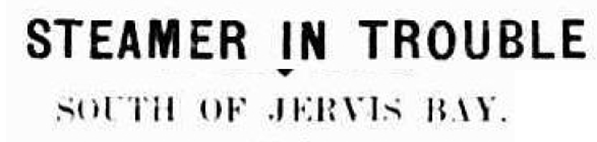
FMS Salazie disabled near Jervis Bay

image

salaz5

August 1910
 

Saturday 10 - The well known French Mail Steamer (F.M.S) Salazie continuing on her voyage from Marseilles to Noumea left Melbourne heading for Sydney, all went well until just south of Jervis Bay.

Sunday 11 -  the seas were calm it was 11 pm,  when suddenly her engines started to race  followed by a loud explosion caused by the cylinder head blowing off startling everyone on board,  leaving the steamer hopelessly disabled and drifting south.

The Salazie hoisted distress flags to attract the attention of any passing vessel. Passengers were relieved when the S.S Karoola hove in sight and approached the Salazie in response to her signals.  They carefully approached to within speaking distance, after some negotiations the Karoola pulled away and continued her journey north much to the disappointment of some of the Salazie passengers.

karoola a


It appears Captain McDonald of the S.S Karoola asked for a large sum of money to take the disabled vessel in tow. This was refused as captain Riguier of the Salazie felt satisfied that he would not be endangering the safety of his passengers by waiting until assistance could be rendered by one of the Messageries Maritimes Company's own vessels. He knew the mail-liner Sydney and the Pacifique were in Port Jackson. Captain McDonald offered to take off the passengers, a reply came back from the mail steamer that there were only a few Sydney passengers on board, the majority being booked for Noumea and they had decided to remain with the Salazie.

Monday 12 - The Karoola arrived in Sydney and quickly passed on the information to the owners of the Salazie. The agents for the Messageries Maritimes Company instructed the companies steamer Sydney to go to the assistance of the disabled steamer.

Monday 12  - The mail steamer F.M.S Sydney left Sydney ahead of the F.M.S Pacifique in search of the Salazie.
Tuesday 13 -  During the morning the Sydney reached the Salazie which had drifted 157 miles south of Sydney to Narooma.  In an attempt to attach a hawser the Salazie was rammed by the Sydney, fortunately, the impact was not too heavy suffering no further damage, but the Sydney had a boat broken, davits smashed, and a portion of her railings carried away. Soon after the hawser was successfully attached and the tow to Sydney commenced.

  • A message from the pilot at Narooma at 7.35 pm stated:-
    "French mail steamer north at 2.30 p.m. with disabled French mail steamer in tow. A steamer like the Pacifique in company, and tugs Hero and
    Heroic north at 2.30 p.m."
  • She was next reported off Moruya, The wind was west-north-west, moderate, the sea was slight.

The Sydney towed the Salazie as far north as Wollongong before handing over to the mail liner Pacifique, then the Karoola continued her journey south.

Wednesday 14 - Shortly after daylight the Pacifique brought the liner into Sydney.  When the Salazie entered the heads the tugs Gamecock and Stormcock took charge of her and towed her alongside the M.M Co.'s wharf at Millers Point.

pacif8


Her passengers and mails were taken to Noumea by the Pacifique.

The damage to Salazie's engines was found to be of a serious nature and would take a considerable time to repair.

image


The Salazie continued in her role as a mail steamer between Marseilles, Sydney and Noumea until January 24 1912 when she broke down during a cyclone on a voyage  from Tamatave to Marseilles and drifted ashore a reef south of Diego Suarez, becoming a total wreck,  The passengers after an exciting experience were landed by the ship's boats. The second officer Mr. Bracco, was however lost overboard.


salaz11

Specification: The Salazie was an iron steamer of deadweight 2450 tons built in Marseilles in 1883.  Length 130.75 meters , beam 12.6 meters.


Ref:- http://www.messageries-maritimes.org/salazie.htm – Salazie
        https://collections.slsa.sa.gov.au/resource/B+10057 - Karoola
        http://www.messageries-maritimes.org/pacifiqu.htm – Pacifique


image

21 February 2018

Ships in the bay.

February 21 2018.
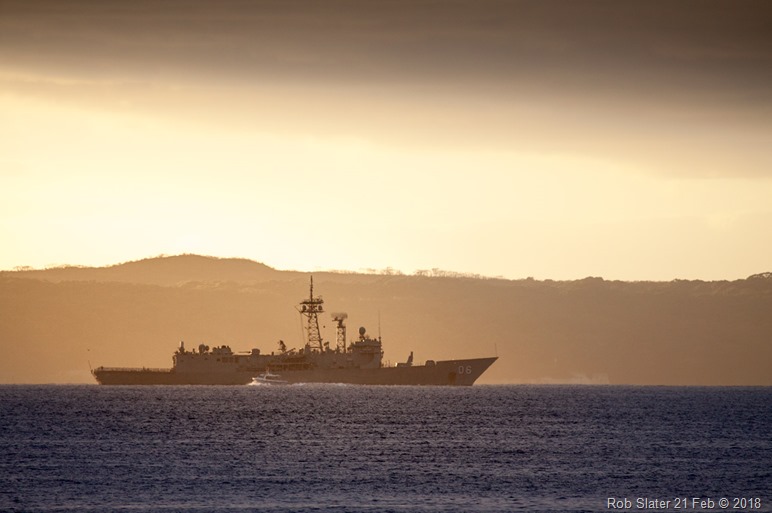
Adelaide Class Guided Missile Frigate, HMAS Newcastle (06) is in the bay at the moment, seen here this morning moored east of HMAS Creswell.


ship-06

Continue reading about HMAS Newcastle.


image


19 February 2018

Sea Horse Horizon - end of an era.

sea horse horizon - paul newman feb 2018

A piece of Jervis Bays maritime history slipped by relatively un-noticed recently when the Sea Horse Horizon untied from her moorings at HMAS Creswell and slowly and quietly left the bay for the last time.

Words by Paul Newman who worked on the vessel over many years.

"We threw the ropes off the old girl for the last time this morning, after 20 yrs in our contract it’s time for retirement.  Previously named Blue Nabilla, built in 1984 in WA for the defunct safety council of Victoria.  She came to Platypus in 1987, then commissioned as HMAS Protector, then handed over to DMS in 1998 and renamed MV Seahorse Horizon for use and abuse, a great work boat very capable, some good and bad memories."

Operated by Defence Marine Services (DMS) located at HMAS Creswell the Sea Horse Horizon has supported the RAN over the last 20 years with mine warfare, torpedo recovery, boarding team practice, navy exercises, mooring work, diving operations. NEOC sea familiarity training, also working with special forces aiding training, helicopter fast too training, salvage work and target towing.

During her military career as HMAS Protector she supported the trials of the Collins-class submarines, and was involved in a search for the shipwreck of the World War II cruiser HMAS Sydney.


sea horse horizon - paul newman feb 2018 orange colour scheme
Her HMAS Protractor colour scheme.

Photo's Paul Newman.


image


16 February 2018

Hole in the Wall

One of the iconic locations in Jervis Bay which still evoke feelings of romance and mystery.
Yesterday afternoon a young couple were enjoying having their picture taken with this beautiful sandstone structure steeped in history...

Continue reading some interesting facts about The Hole in the Wall


IMG_9516


image

Ships in the bay

Feb 16 2018.
There has been quite a bit of Navy activity in the bay since the school holidays finished...
All this week MV Sycamore has been moored near Vincentia, leaving the bay this morning heading north.

HMAS Newcastle has been in the bay as well,.  She is one of four Adelaide Class Guided Missile Frigates (FFG) in service with the Royal Australian Navy.

IMG_9488

HMAS Newscastle leaving the bay in a heavy haze being created by the a strong north-east wind late yesterday afternoon.


huon-2018
IMG_9485

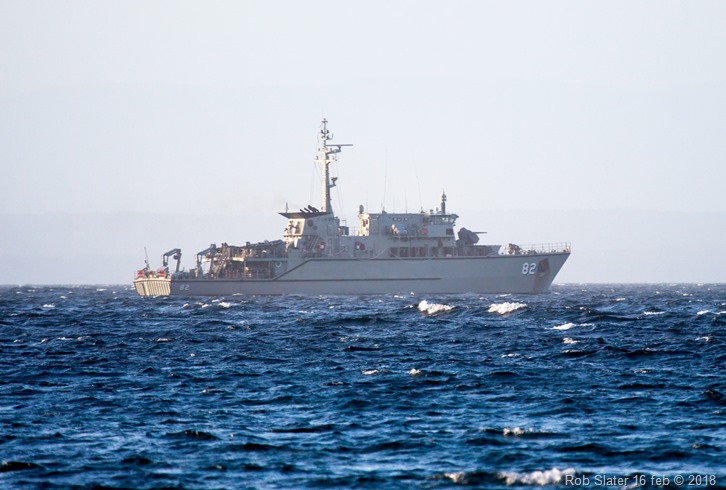
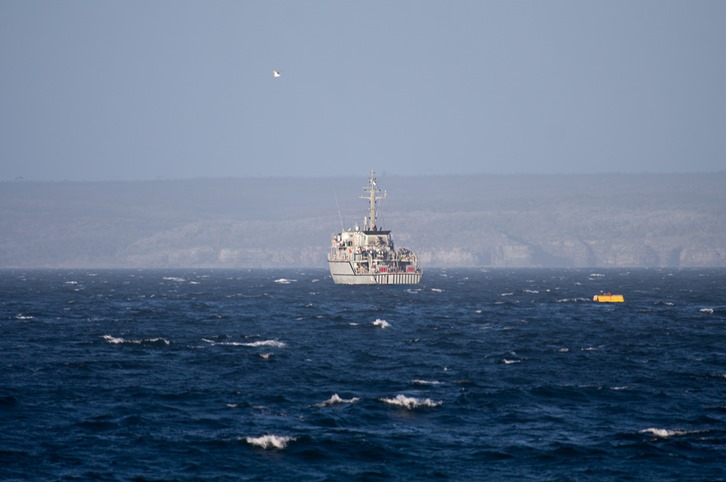
HMAS Huon was also moored near HMAS Creswell, she is the first of six Huon class minehunters built for the Royal Australian Navy. Other Huon class minesweepers have visited the bay in the past.

The bay was very hazy, hence the soft photographs.

Continue reading about HMAS Huon and MV Sycamore


image

13 February 2018

Drama at sea, two barques collide and make for Jervis Bay.

131820946


Most ships at this time used oil lamps to indicate their position at night to other ships who may be in close proximity, but not always, and in this case the lack of lights nearly ended in disaster.

Tuesday 20, 1874 - The barque Naramissia from Newcastle bound for Melbourne was sailing 40 miles south of Cape St George, it was 3 am in the morning when without warning she was struck by the whaling barque, Sapphire.   The Sapphire carried no side lights and struck her with her flying jib-boom on her mizzen chains.  Five of the Naramissia's crew, thinking she was about to sink jumped on board the Sapphire leaving the master and three men onboard.  Fortunately, the ship remained afloat, the master took her into Jervis Bay where the Sapphire joined her the next day. The Naramissia stayed in Jervis Bay for four weeks wind bound, during which time they carried out repairs

The Sapphire lost one boat and spritsail yard. The Naramissia had her stanchions and gaff carried away, and her covering board and spritsail damaged.

1872 - The Sapphire had been to Jervis Bay before, she often hunted whales along the coast near the bay. In 1872 she put into the bay to recruit, She had been at sea for 10 months and had taken 25 tons of sperm oil.
1875 -  She put into Jervis Bay to try out 9 tons of whale oil. The total take of oil for the voyage was 21 tons.

1885 image
1885 Long hard dangerous months at sea with small rewards meant finding experience crew was becoming harder,  ship captains and owners were forced to take anyone who was willing to come aboard, most were scoundrels with no experience of working aboard a ship, this led to conflicts. 
In 1885 some of the newly recruited crew of the Sapphire, as was customery were paid some of their wages in advance, absconded,  and after a merry chase for four days were caught and
forced back aboard the boat by the police. They mutinied and refused to go to sea throwing essential equipment overboard in an attempt to stop the ship leaving port.  The police were called again arresting the two ringleaders removing them from the ship.  New equipment was loaded and the ship finally sailed.

Ref: https://stors.tas.gov.au/AUTAS001131820946

Meaning - mizzen-chains: Plates of iron bolted to a ship's sides abreast the mizzen-mast for securing the shrouds and backstays of that mast.


image


8 February 2018

Pasadina Launch 1937.

"Ah, well! those were the good old days - or the bad old days - which? depends on what point of view you look at it."


The-'Pasadena'-after-launching
The Pasadina after launching.

The trawler Pasadina, built by AWM Settree for Mr Ward of Sydney was launched into Currambene Creek on the high tide at 7 a.m Thursday, November 18, 1937, without incident

She is still to have her Canadian built, 120 hp "Vioian diesel engines and other machinery installed. She wasn't as large as some of the other boats Mr Settree had built in his shipyard on the banks of the Currambene,  but she stood out because of her unusual design also Canadian.  Her bows somewhat resembled a yacht, she looked like she was built for speed.

Measuring 65ft in length, 15ft beam,  and draws 7ft, 6in of water, and can carry fuel for a 4000-mile cruise.

She was built from all local timber, except the decking, which is of Beech from Wauchope.  She has insulated boxes for storing fish.

At the time of the launching, one of the old identities of Huskisson remarked:- It brought fourth reminiscences of launchings 50 years ago. The festivities continued for two or three days.  Mr Parnell, at that time landlord of the Tomerong Hotel - there being no hotel in Huskisson - was commissioned to supply the good cheer, which would arrive in barrels by bullock waggon
and when the festivities went over a lengthy period,  necessitated a return trip.  Foot racing and other sports were indulged in,  and of course, dances every night.  Ah, well! those were the good old days - or the bad old days - which?,  depends on what point of view you look at it."


image


6 February 2018

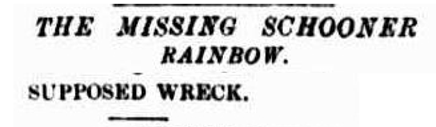
The Missing Schooner Rainbow

image
Stories like this are stark reminders on just how dangerous sea travel was in the early 1900's.

The Rainbow of Whangaroa, owned by Messrs. Lane and Brown of Auckland, was a new three-masted schooner on her maiden voyage along the Australian eastern seaboard.
Leaving Melbourne in ballast on the 28th of November 1890 for the Clarence River, to bring down a cargo of hardwood for the Melbourne Harbour Trust.  She was under the command of the well known Melbourne Captain, Kenneth M'Donald, and carried a crew of 9 men.
Built in Auckland from Kauri and described as a handsome vessel of 297 tons register.

image

24th December 1890 - Reports started to appear expressing concern about the overdue Schooner. A correspondent writes to the Clarence River paper as follows:-

"something must have happened to the Rainbow. She left Melbourne before the Examiner, and, being light, might have turned turtle. She must have been in the same gale as the examiner. "

Life Buoy found off Beecroft Head.

March 25, 1891 - The Marine Board received a telegram from Jervis Bay:- "Captain Brooks, of the Schooner Samoa, reports finding a life buoy, painted white, with the words 'Rainbow of Auckland.' in black letters five miles east of Beecroft Head."


image


March 26, 1891
-  After the finding, melancholy reports started to appear in newspapers saying all hope was lost and it was presumed and almost certain the vessel had foundered in the stormy weather along the coast in late November taking her Captain and crew beneath the waves.

image


Nothing more was found from the vessel or her crew, they were never seen again.

The Crew
C.G Hollnen, John Blackie, D Ensken, H, Montgomery, W.H. Thomas, Thos. Batman, W.C. Pierkard, W. M'Neill and J. Ward.


image


Ships in the Bay

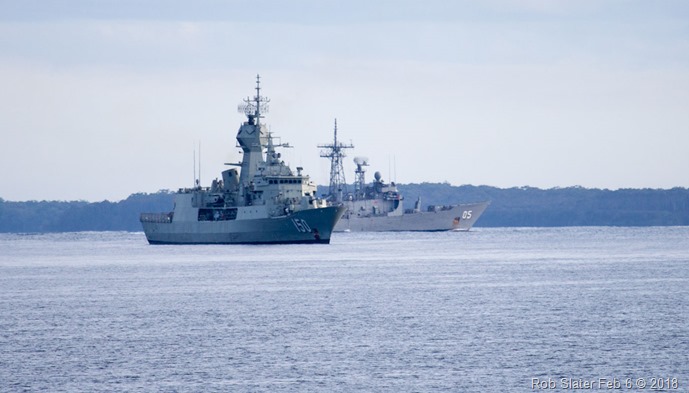
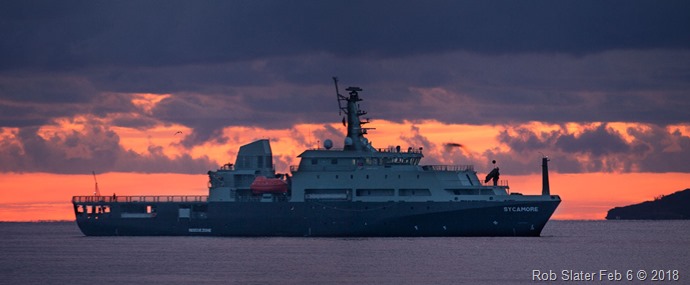
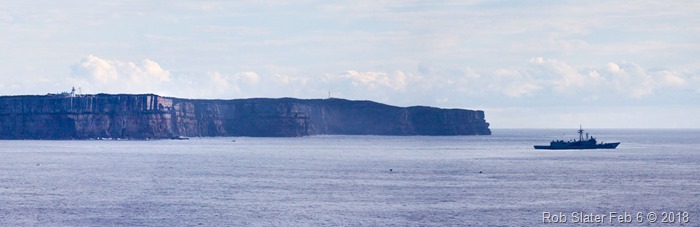
Today we have three ships in the bay.
Appearing over the horizon silhouetted against the red glow of the sunrise the Adelaide class guided missile frigate HMAS Melbourne (111) can be seen entering the bay.

IMG_8874


4
she moved across the bay coming to rest near HMAS Creswell.


5
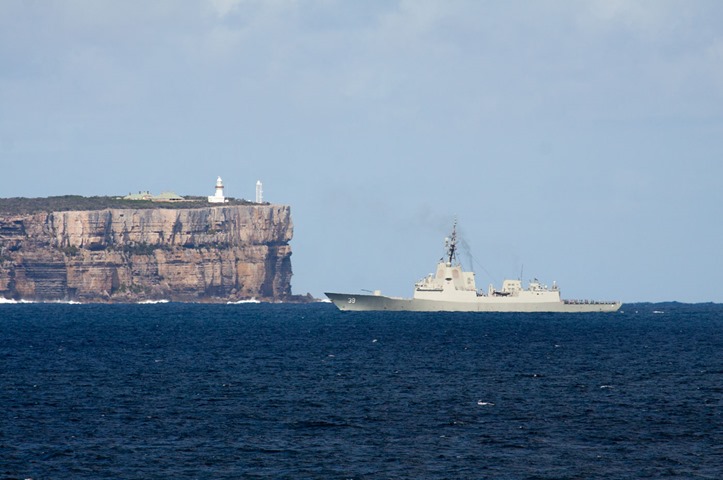
Not far from the Melbourne was the lead ship of the Anzac-class frigates, HMAS Anzac.

IMG_8995

Melbourne passing astern of Anzac heading out of the bay.


1
IMG_9091
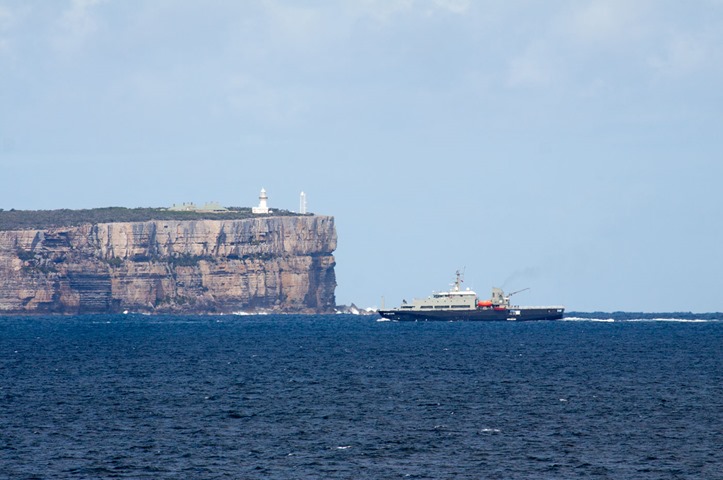
MV Sycamore the new multi-role aviation training vessel, photographed during the sun rise anchored near Collinwood Beach.


7

HMAS Melbourne leaving the bay.


image

1 February 2018

Ships in the bay

Today we have two ships in the bay the HMAS Hobart  and the training ship MV Sycamore.

Air-Warfare-Destroyer-Alliance


HMAS Hobart is the first of three ships of the Hobart Class guided missile destroyers. Hobart will provide air defence for accompanying ships in addition to land forces and infrastructure in coastal areas, and for self-protection against missiles and aircraft.


sycamore

MV Sycamore, The Royal Australian Navy's new multi-role aviation training vessel (MATV), MV Sycamore was launched in Vietnam in August 2016.

The ship’s primary role is to support maritime aviation training of Defence helicopter flight crews. The 94-metre civilian ship is a flight deck equipped sea-going training vessel for most types of helicopters used by the Australian Defence Force.

They were doing some close quarter sailing this afternoon.

IMG_8614


IMG_8625


IMG_8626

Continue to other closer, interesting pictures of Sycamore – from her last visit.


image

Porthole built in 1952

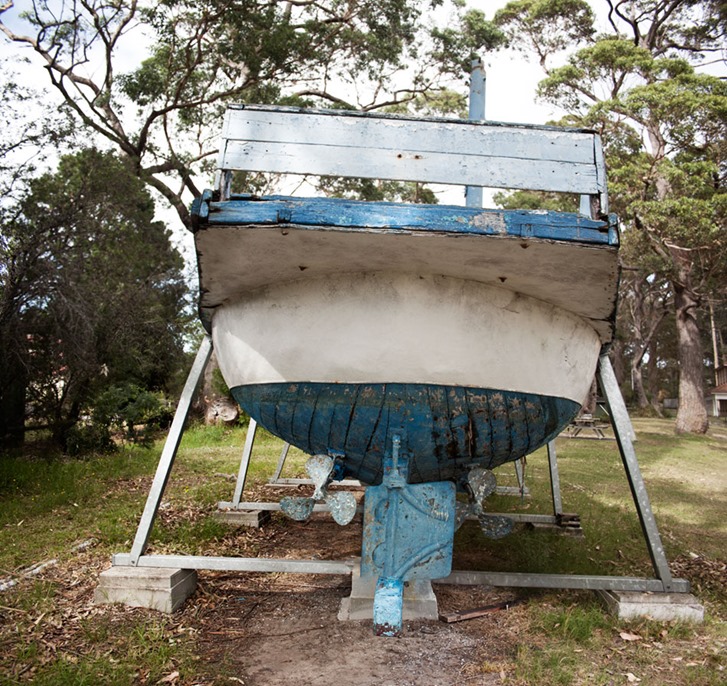
Today I climbed on board the decks of one of the Settree built trawlers which is located within the grounds of the Maritime Museum.
Originally named Antoinette, she was built as a snapper fishing boat for Rocco Musumici by Alfred Raymond (Alf) Settree in 1952. Later becoming a recreational fishing boat.  She was a fine vessel in her time,  timber framed and planked, the top deck at a later stage has been overlayed with fibreglass which is deteriorating badly and will need plenty of work.

There are still plenty of local people who remember her plying across the bay on her regular fishing trips.

5

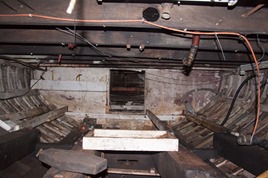
Below decks the old timber frame looks in pretty good condition, since the vessel arrived at the museum not much work has been done to her. Looking below you can see she was a working boat which did many hours at sea.

IMG_8568IMG_8567IMG_8566
Click on images to enlarge.

IMG_8563

Bow detail.

4

Her unique stern shape is known as a canoo stern, she was driven by twin engines, which have been removed.

Vessel Dimensions: 8.23 m × 3.66 m (27 ft × 12 ft
Owners - Rocco Musumeci, Lance Hanley, Ken Norford, Claudio and Katrina Zarella, Wayne Walker, Bob Seery, Kevin Polley


1

Looking from her decks across the museum grounds you can see the main building of the museum to the left, the Alf Settree Boat shed on the right, with the fish pond in the foreground, well worth a visit.


image