 |
| 1919 a large crowd of people had gathered on the shoreline of Currambene Creek to watch the launching of the Schooner Huddersfield. Everything went as planned as she slipped effortlessly across the timber slipway entering the cold water of Currambene Creek. The successful launch was greeted with a loud cheer from the crowd who had travelled from all over the district to watch this historic event. |
 |
 Launch of the Huddersfield in 1919 |
| The Huddersfield, a 3 masted auxiliary topsail schooner built to the order of Mr Sidney Moore by local shipbuilder Joseph Dent at Huskisson, she measured 112ft long overall and weighed 174 tonnes, had a loaded draft of 9ft aft and 7ft 9in forward at a cost of 7500 pounds. After the launch, the vessel was taken to Sydney to have her Scandia crude oil engine of 100 h.p. fitted. She was capable of a speed of 61/2 knots. She also had a crude oil winch fitted capable of lifting 3 tonnes supplied by Messrs. Nelson and Robertson of Sydney. 1920 - Friday 7th May. Her new commander Captain Muir was reported "exceedingly pleased with the trial and is looking forward to a smart trip across to Gisborne New Zealand." Saturday 8th May.
1923 - Her contracts had run out and she spent 7 months laying idle in Sydney Harbour before being overhauled. The overhaul included adding passenger accommodation on her deck. 1924 March 13th - At the completion of the overhaul the Huddersfield underwent trials before being placed into commission, replacing the Rachel Cohen in the service of the Federal Government. 1924 May 28th - Under the command of captain H.C Bowden she left Sydney bound for Darwin where she arrived on the 7th of July after an uneventful pleasant trip. Captain Bowden had been her skipper for three years, the crew consisted of the mate, driver, three able seamen, two ordinary seamen, and the cook - nine men all told. Bowden was a very experienced skipper with 50 years of experience at sea, he had sailed the Huddersfield from Australia to New Zealand and from Queensland across to New Guinea with 165 head of cattle without losing one head, which was quite a feat in those days. Speaking of the Huddersfield he said, 'he has never yet been aboard a better vessel" 1924 November 6th - The Huddersfield was caught up in legal proceedings when a warrant of execution, issued by the local court in Holmes versus Boucaut Bay Company The Huddersfield name made headlines across the world when she became involved in the failed search for two white women who were alleged to have been taken captive by aboriginals in the Northern Territory. The women were reported to be apart of a small group who survived the sinking of the Douglas Mawson which foundered near Groote Eylandt during a cyclone en route from Burketown to Thursday Island, the rest of the survivors 10 men were reportedly attacked and speared to death by the local aboriginals. The Douglas Mawson was also built and launched on the south coast of NSW at Bawley Point on the 11th of April 1914. July 1924 - 16 months after the loss of the Mawson a startling report appeared in the Brisbane Daily. The message was to the effect that an Australian blackboy employed as a lugger hand had talked with natives on Cunningham Island, one of a small group off Arnhem Bay. He told them that he had heard of two white women who were held captive by blacks on the mainland of the Northern Territory. One of them with a white girl infant was living in the camp of a wild black known as Bokara, and the other a younger woman was held by another wild native named Majara. |
| Huddersfield Expedition. |
 |
| The news caused a sensation all over Australia, people called for the Government to send a rescue party immediately. The Federal Government including the Prime Minister and cabinet minister, Mr Pearce were widely condemned for taking another four weeks to look into the matter. Eventually, orders were given, not to send a warship, but a three - masted schooner, the Huddersfield. Reports at the time told a terrible story of the murders, this news sparked much community outrage. Papers all over the world ran stories about the tragedy the Huddersfield name became famous the world over. |
 |
| Four Japanes murdered. From time to time over many years stories surfaced to keep alive the belief that Mrs. Willet and her daughter continued to be captive of the blacks, until at last these stories died away, and no one can now know for certain whether the original stories were true, and if so, what fate overcame the mother and daughter. 1928 - The Huddersfield returned from her costly and failed expedition in October 1924 and spent many years lying at anchor opposite Stokes Hill. She sprang a leak and was reported to have a stream of water coming into her from a space about a foot long and an inch wide. Her pumps were employed and the water reduced, the hole was repaired but she was still taking water, the owners stripped her of any worthwhile parts. She was in a bad condition with unconfirmed reports her hull was being eaten by toredoe worms.
|
 |
 |
.

23 May 2017
The Schooner Huddersfield and the missing white women mystery.


19 May 2017

17 May 2017
Ships in the bay.
| 17th May 2017 We have another two ships in the bay today. The HMAS Darwin (FFG 04), named for the capital city of the Northern Territory, is an Adelaide-class guided-missile frigate of the Royal Australian Navy (RAN). One of four ships ordered from the United States, Darwin entered service in 1984. During her career, she has operated in the Persian Gulf, as part of the INTERFET peacekeeping taskforce, and off the Solomon Islands. The HMAS Toowoomba (FFH 156) she is the seventh Anzac-class frigate of the Royal Australian Navy (RAN). She was laid down in 2002 by Tenix Defence Systems and commissioned in 2005. In 2007, Toowoomba was deployed to the Persian Gulf as part of Operation Slipper. Her second deployment to the Middle East occurred during the second half of 2009. As part of this, she became the first RAN vessel to operate with the counter-piracy Combined Task Force 151. |
| HMAS Darwin |
 REF: https://en.wikipedia.org/wiki/HMAS_Darwin_(FFG_04) HMAS Darwin spent most of the day anchored off HMAS Creswell. |
HMAS Toowoomba (FFH 156) |
 https://en.wikipedia.org |
|
12 May 2017
Fishing report for Jervis Bay 1912
| "The bay at present is discoloured to a milky whiteness by the whale-oil factory operations." |
|
 |
| Sun (Sydney, NSW : 1910 - 1954), Thursday 24 November 1912, page 12 |
| This fishing report makes interesting reading, especially the part about the bay being covered with a white slick from the whaling operation. The correspondent actually wrote the article aboard the whale processing factory ship the Loc Tay. The Loch Tay and another factory ship the Polynesia were a permanent fixture in the bay at this time and were part of a larger whale hunting operation being carried out off the NSW coast using Jervis Bay as a base. |
| Writing aboard the Loch Tay In Jervls Bay, my angling horizon for the moment is naturally limited, but it has also been perceptibly broadened, for there is nothing the old fisherman likes better than to see new fishing grounds. Jervls Bay is the place where the southerlies branded J.B. in Sydney are first recorded, and there is no doubt the expansive inlet has more than its fair share of the breezes that are actually brewed on the fringe of the ice further south. My last experience of Jervls Bay was aboard the Thetis, where the trawl swept across tho bottom for a couple of miles and the catch turned out to be chiefly red weed and skates. More intimate investigation during trip 3 to Captain's Point, where the Naval College is being built and to the little town of Huskisson, where the Dent clan predominates, revealed the fact that off Bowen Island and Captain's Point are good schnapper waters. On a new pier in front of the college site several workmen were fishing and catching large coloured leather-Jackets, slippery mackerel, yellowtail, and other fish, and a Dent party was wooing the red fish a mile further towards the strait between Bowen Island and the mainland. At Huskisson the little river is a first-class flathead, bream, and blackfish ground, and about 300 yards from its entrance a reef is the feeding ground for several varieties of marine fish. Around the bay are innumerable hauling grounds, where whiting, mullet, and bream were catchable, but there were no workers on them most of the time, although the Loch Tay folk would have been ready purchasers of a couple of baskets a day. At Huskisson no bait was procurable, but no doubt a day's notice would suffice for the local haulers to bring some ashore. The bay at present is discoloured to a milky whiteness by the whale-oil factory operations. |
| Continue reading about the Loc Tay and Whaling in Jervis Bay. |
| Continue reading about - "Jervis Bay, where the weather comes from". |
| The S.S.Thetis mentioned in the article was a steam trawler which worked the coast from Sydney to Jervis Bay, she was involved in the search for the S.S. Dandenong which sunk off Jervis Bay in 1876, becoming one of the worst maritime disasters near our shores, 40 people went down with the ship including women and children. The story of the disaster is about the amazing struggle for survival in impossible conditions, involving great acts of bravery and sad loss - Continue reading about the S.S. Dandenong. |
 |
| Sun (Sydney, NSW : 1910 - 1954), Thursday 28 November 1912, page 12 |
| Serious complaints have been made at Jervis Bay respecting the discoloration of the water, resulting from the work aboard the factory steamers on which the whales brought in by the gunboats have been treated. A Nowra resident, Mr J. Miller, writes: - The waters of Jervis Bay are being polluted to such an extent that the fish are leaving tho bay instead of entering it, as is their habitat this time of year. The waters are of a milky appearance, and have a peculiar odour, while the shores are strewn with large pieces of blubber, intestines and the oysters to are turning white. We have seen large schools of fish approaching the entrance, but as soon as they reach this discoloured water they immediately turn back. We attribute the above causes to the presence of two large factory ships, with their attendant gunboat whalers one, the Loch Tay, causing the greater pollution, we presume through the use of acids, chemicals, etc, in the treatment of the whales. This boat has dealt with over 150 carcases, according to press reports. This is ruining the fishing industry, and keeping tourists and amateur fishermen from patronising Jervis Bay. We also understand that no revenue is being collected from these foreign ships. They carry all their own goods, butter, plumbers', materials, fitters, and coopers goods, in fact, they are fully equipped to do all their own work with their own men and materials. This is no good to Australia. I would also point out that in parts of Jervis Bay the deposited grease causes the sand to adhere to the feet when one walks on it. -
|
|
11 May 2017
HMAS Newcastle. Jervis Bay.
| 11th May 2017 Today we have a fantastic selection of photos sent to us of the HMAS Newcastle which is currently conducting training exercises in the bay. | |||
 | |||
| |||
| |


9 May 2017
Ships in the bay.
| HMAS Newcastle is still conducting big gun practice today. This morning the bay shook as volley after volley exploding from high powered ordnance landed on the live firing range of Beecroft Peninsula. |
 HMAS Newcastle - Continue reading. |
|
H.M.S. Porpoise, Experiences in a hurricane off Jervis Bay.
| 1900 - HMS Porpoise returns to Jervis Bay badly damaged. |
|

4 May 2017
Navy activity today–Jervis Bay
| At midday, a low flying helicopter was demonstrating some precision flying following one of the work boats from HMAS Creswell about the bay just above the water. It made a dramatic picture as they passed in front of Point Perpendicular. |
 |
 |
| With HMAS Newcastle in the background. |
|
Ships in the Bay
| 4th May 2017 - HMAS Newcastle. |
| The bay has another visitor, HMAS Newcastle moved slowly across the bay. |
 |
 |
| HMAS Newcastle (FFG 06), named for the city of Newcastle, New South Wales, the largest provincial city in Australia, is an Adelaide-class guided-missile frigate of the Royal Australian Navy (RAN). The last ship of the class to be constructed, Newcastle entered service in 1993. During her career, the frigate has operated as part of the INTERFET peacekeeping taskforce, served in the Persian Gulf, and responded to the 2006 Fijian coup d'état. The frigate is active as of 2017. |
| REF: https://en.wikipedia.org/wiki/HMAS_Newcastle_(FFG_06) |
|
Jervis Bay Autumn 2017
 |
| The Autumn light across the bay this morning was beautiful, the water was calm and clear. |
|
3 May 2017
Ships in the bay
HMAS Success (OR 304) |
| Anyone near the waters edge this morning would have heard 4 loud distinctive horn blasts coming from across the bay. This would have drawn your attention to the barely decernable shape of a large ship against the dark shoreline on the eastern side of the bay. This was the HMAS Success. There are two ships in the bay at the moment, the other being a spanish ship which I don't have any details for. Being so far away in the dim light made taking a decent photograph difficult.. |
  |
| HMAS Success (OR 304) is a Durance-class multi-product replenishment oiler serving in the Royal Australian Navy (RAN). Built at Cockatoo Island Dockyard in Sydney, Australia, during the 1980s, she is the only ship of the class to be constructed outside France, and the only one to not originally serve in the Marine Nationale (French Navy). The ship was part of the Australian contribution to the 1991 Gulf War, and was deployed to East Timor in response to incidents in 1999 and 2006. The ship was fitted with a double hull during the first half of 2011, to meet International Maritime Organisation standards. |
| REF:https://en.wikipedia.org/wiki/HMAS_Success_(OR_304) |
|
2 May 2017
Time Comparisons – Huskisson.
| It's interesting to see how much a place has changed. Life at Huskisson in the eighteen hundreds would have been a lot quieter and moved at a lot slower pace. |
|
|
|
|
|
|
|
|
|
|
|


1 May 2017
On this day
| May 1st 1899, Point Perpendicular Lighthouse was opened. |
 |
| As reported in the Australian Star 1897 |
 |
| As reported in the Coolgardie Miner 1899 |
 Taken 1917 |
| Built to replace the ill fated and wrongly positioned Cape St George Lighthouse built in 1860. |
 |
| Continue Reading. |
|
27 April 2017
A NEW KETCH FOR THE ISLANDS.
| 31 May 1900 A new ketch, which has been named Verdelais has just been launched by Dent's yards, Jervis Bay and will be towed up to Sydney this week to be completed. She has been constructed for the Catholic Mission and is intended for the island trade in and about the Solomon Islands. Mr. Justus Scharff, who is the local agents for the Verdelais, states that she will be fitted with a Standard engine during her stay in port here. |
| 8 June 1900. |
|
26 April 2017

25 April 2017
HMAS Creswell
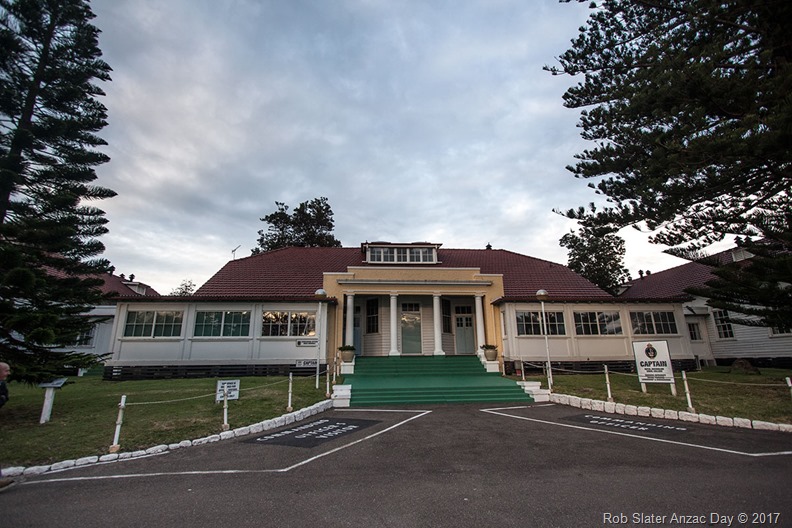
| After the Anzac Dawn Service I took a few photo's of some of the beautiful historic buildings of HMAS Crewsell. |
 |
 |
 |
 |
 |
|